The conversations our team has every week tend to start in the same place. Inventory is there; demand is there, but the deal stalls when the documentation and condition evidence don't hold up.
TL;DR
Europe's battery market has a problem. Billions of euros in battery inventory sits unused, not from low demand, but from missing verified data.
Batteries sit unused without: State of Health verification, Battery Passport compliance, and standardized condition evidence. With lithium-ion pack prices falling to USD 70/kWh for stationary storage, the margin for error has disappeared.
The solution lies in verified data frameworks that enable transparent battery trading, compliance documentation, and risk-free transactions across the European battery circular economy.
This is the starting point of our new white paper, Stranded Capacity. In many secondary battery transactions, the limiting factor isn't volume, its qualification and visibility. Battery assets sit unused in warehouses, vehicles, and storage sites. Why? Verification data isn't consistent when batteries change hands.
The market context makes this urgent. Lithium-ion battery prices have dropped sharply. BloombergNEF's 2025 survey shows average pack prices at $108/kWh, while stationary storage packs cost $70/kWh.
As new battery prices drop, profit margins shrink for used batteries that need diagnostics, repairs, or warranty coverage. The secondary battery market increasingly turns on qualification speed and evidence quality.
👉 Want the full framework for unlocking stranded battery inventory? Download the white paper now to access qualification workflows, routing economics, and compliance touchpoints that enable verified battery trading across Europe.
Two pools, two different problems: Second Chance vs. Second Life batteries
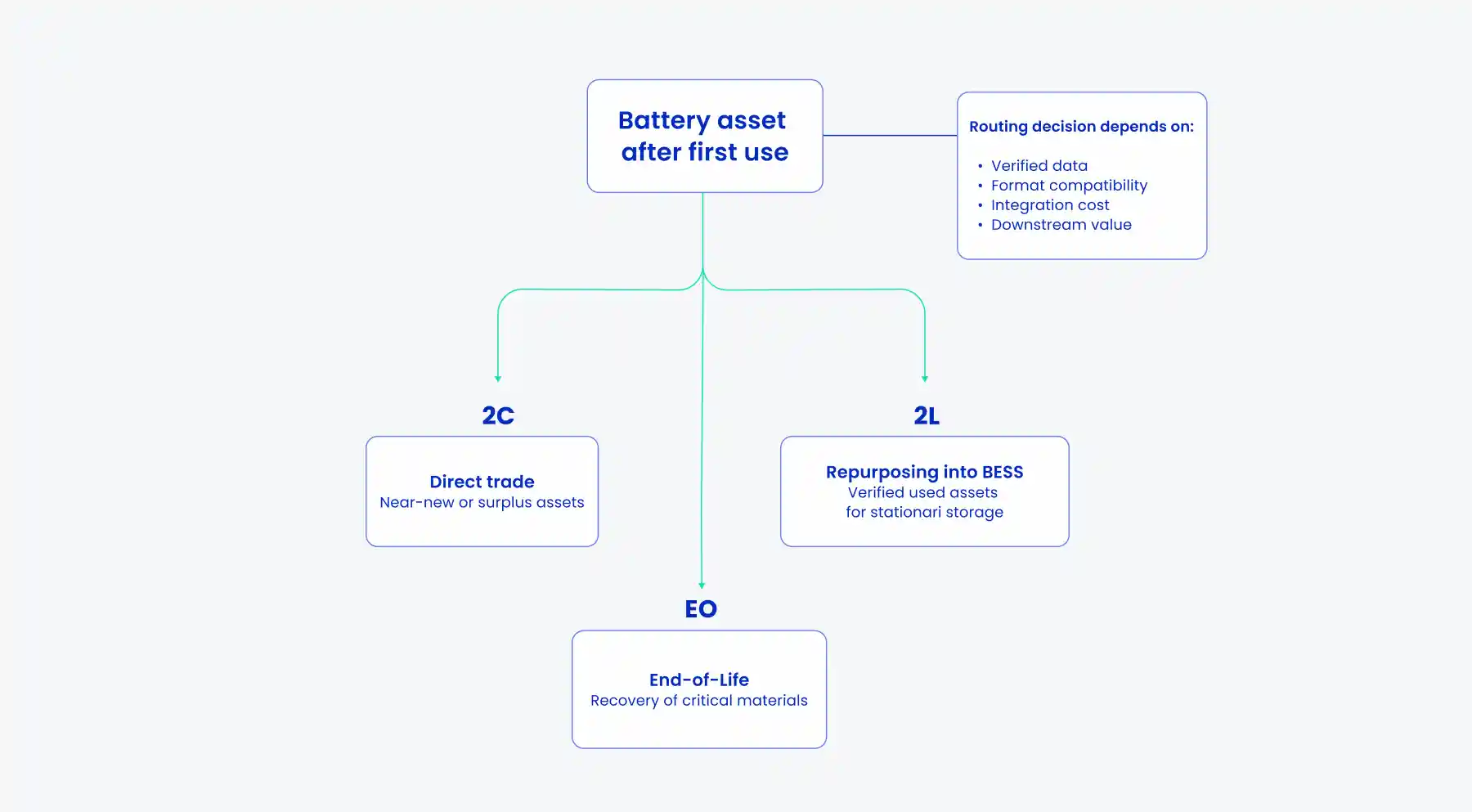
The paper draws a clean line between Second Chance and Second Life battery inventory. In practice, that line shows up the moment you try to move an asset, not when you write the definition.
What is Second Chance battery inventory?
Second chance batteries are the workhorse when the paperwork and format are clean. These are unused or near-new battery modules coming out of OEM overstock or production surplus.
These batteries never ran in vehicles, so cycling history rarely comes into question. You need to answer simple questions: What is it? How was it stored? Can you prove it to buyers, insurers, and financiers?
With clear evidence, Second Chance battery trading moves fast. You skip expensive steps: no teardown, minimal diagnostics, and intact original configuration. For BESS integrators, this feels like buying equipment, not managing a complex battery repurposing program.
This isn't theoretical for us. We've supported placements of unused EV battery modules from OEM surplus into downstream applications. When battery specs, data, and documentation match buyer needs, inventory moves at scale. When one piece is fuzzy, the same stock becomes "not tradable" overnight.
What is Second Life battery inventory?
Second life batteries are real, but conditional and the conditions aren't just technical. Used EV batteries can power stationary storage. But buyers need strong evidence before they'll accept the risk.
You need a verified State of Health (SoH), not a guess. You need a usable Battery Management System (BMS) data record where possible, not a vague story. You need to know what happened to the pack including any safety events. The practical details make or break projects: dangerous goods logistics, fire safety, storage conditions, and insurance premiums.
Late discovery of these issues doesn't cause "minor friction". It stops the deal completely.
Both routes can work. But neither scales unless the battery lifecycle data travels cleanly with the battery from one handover to the next. Without that, you get one-off deals and a lot of stranded battery inventory.
What battery buyers are asking for: The new baseline for secondary battery transactions
The paper maps what buyers need before they commit to a transaction. The list is shorter than the technical literature suggests, and longer than most sellers can currently provide.
Essential battery data for secondary market transactions:
- Verified State of Health (SoH) and State of Charge (SoC), especially for LFP batteries with harder-to-measure voltage curves.
- Cycle history and depth of discharge (DoD) from the BMS
- Battery provenance: who owned it, where it was deployed, and what the custody chain looks like
- Battery format and chemistry data sufficient for integration into BESS or other applications
- Compliance documentation: Battery Passport-grade records, Extended Producer Responsibility (EPR) status, and clarity on who carries the liability after the sale
If any of these are missing, the buyer either prices in the risk or walks away. Both outcomes destroy value for the seller.
👉 Ready to move battery inventory from stranded to tradable? Download the white paper to access the complete framework: qualification workflows, routing economics, compliance touchpoints, evidence standards, and role-specific guidance for industry leaders.
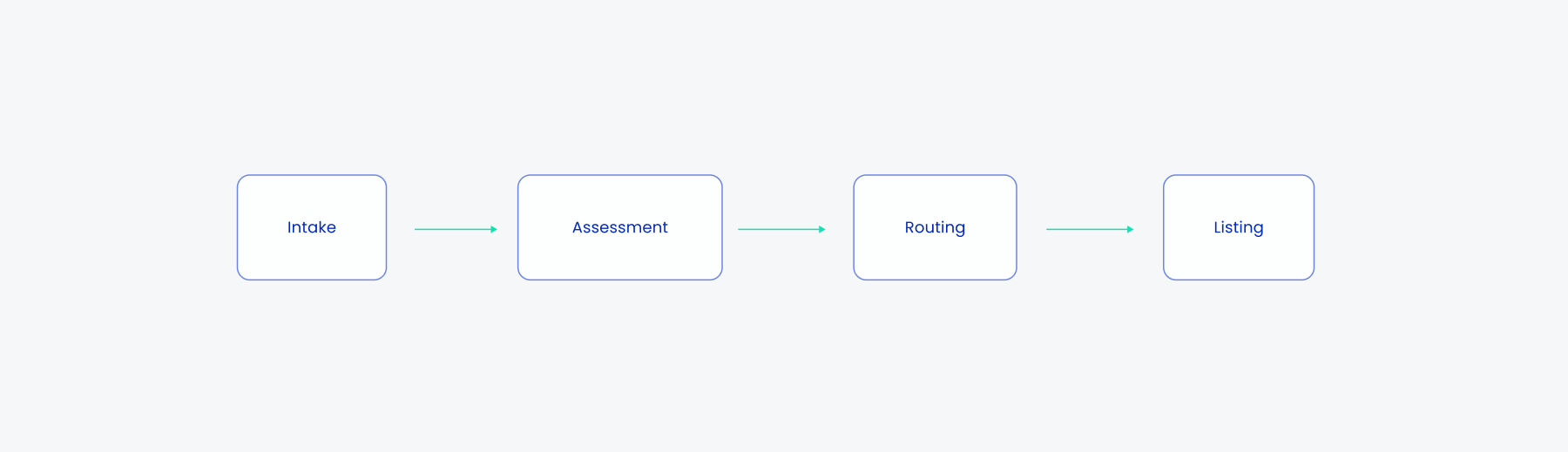
The legacy battery fleet nobody has a passport for
There's a practical problem the paper addresses directly. The Digital Battery Passport (DBP) applies to batteries placed on the EU market from 18 February 2027 onward. Most secondary batteries today are pre-2027 or undocumented: surplus stock, used EV packs, and trader batteries. So how do you trade batteries without a Battery Passport?
These legacy assets will never carry a formal Passport. Waiting for one is not an option. What they need instead is a minimum evidence standard for battery trading:
- Asset identity and format
- Chemistry and configuration
- State of Health (SoH) and available BMS data
- Ownership history
- Safety events log
- Seller documentation
- Intended repurposing route
- Liability status at transfer
This does not replace the EU Battery Passport. It creates a practical bridge for legacy battery assets until passport data becomes standard. The principle is simple: complete, verified evidence makes batteries easier to price, insure, and sell.
EU Battery Regulation compliance as a transaction layer
Most discussions of the EU Battery Regulation frame it as a burden. The paper argues for a different interpretation.
After 18 February 2027, EV and industrial batteries over 2 kWh require a Digital Battery Passport in the EU. The Passport isn't one document. It's a digital record tracking battery identity, materials, performance, and lifecycle throughout its life.
Why the Battery Passport matters for secondary battery markets
For the circular battery economy, its significance is practical:
- It establishes a common battery data layer that buyers can rely on without renegotiating disclosure with every seller
- It lets battery condition and compliance information travel with the battery rather than being reconstructed at each handover
- It allows battery price discovery to happen on comparable evidence
There's also a battery liability question. If you modify a battery and resell it, you become the producer. You're responsible for information, labeling, and EPR compliance.
If this isn't clear at sale, the original seller often faces liability issues later.
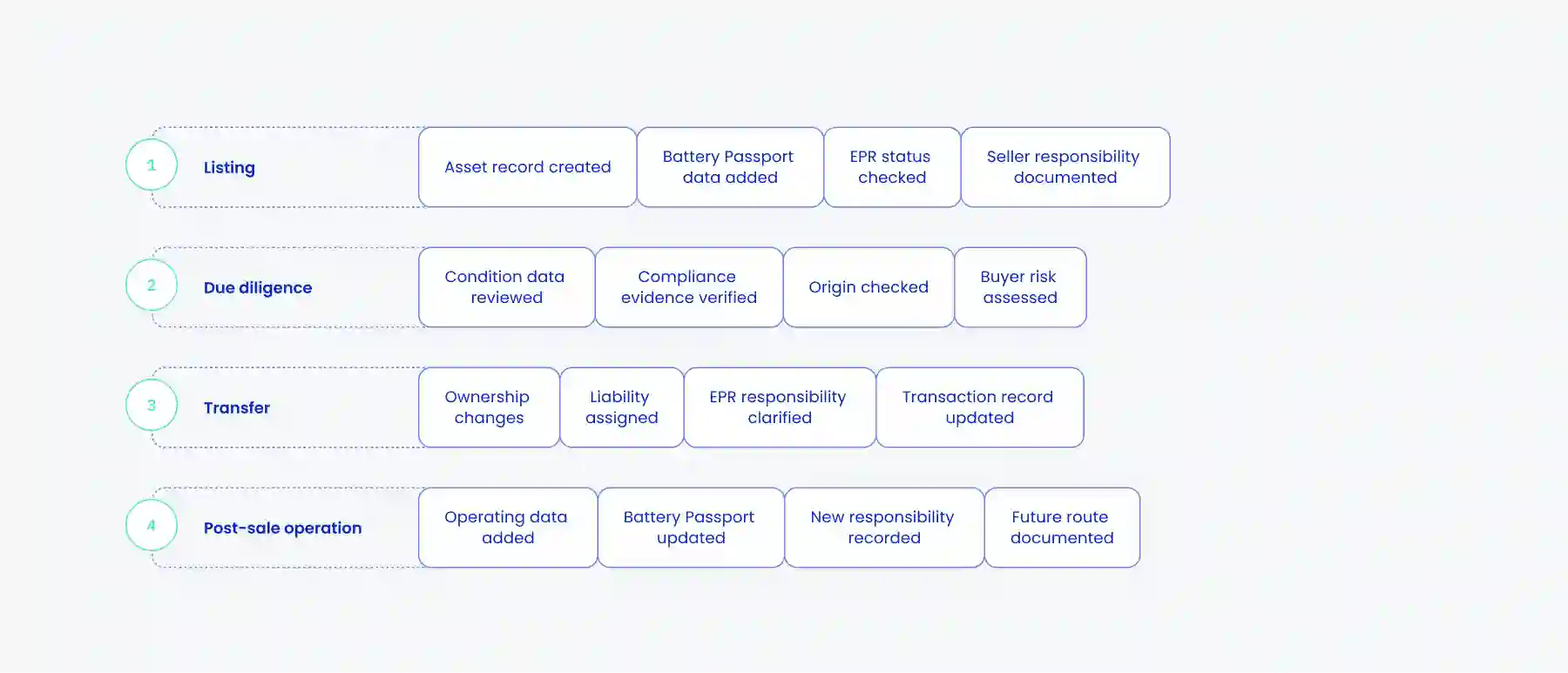
What verified battery trading looks like in the market
Circunomics already applies this model. By the end of 2025, Circunomics traded roughly 0.5 GWh of battery volume. As of July 2026, the marketplace connected 260 customers and participants. Circunomics expects to trade around 1 GWh in 2026, roughly doubling the previous year.
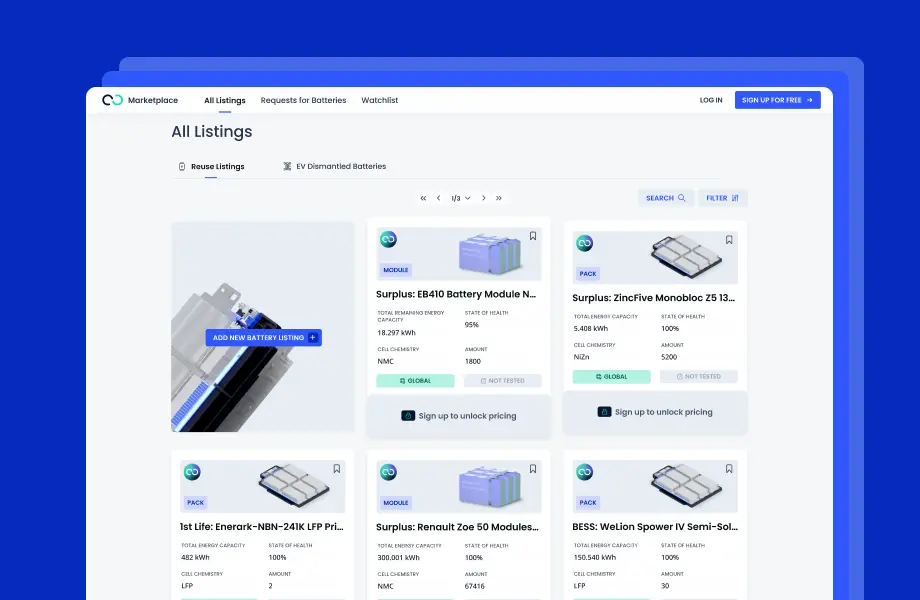
These numbers matter. Unit count alone doesn't capture battery trading. Formats, chemistries, applications, and project sizes differ widely. Battery marketplaces succeed by converting scattered inventory into searchable, comparable records that buyers can assess and purchase.
The outlook: Data quality will determine battery market winners
The European battery asset market will consolidate around battery data quality. Platforms offering verified data, compliance records, and routing logic will control market value.
Buyers and regulators will reject platforms lacking transparency.
Stranded battery capacity is not a permanent state. It's a market design problem with a market design solution.

Frequently Asked Questions (FAQ)
What is stranded battery capacity?
Lack of verified data and documentation stops sellers from trading Second Chance (surplus) and Second Life (used EV) batteries.
What's the difference between Second Chance and Second Life batteries?
Second Chance batteries are unused or near-new battery modules from manufacturer overstock or production surplus, never used. Second Life batteries are used EV packs repurposed for stationary storage after automotive use.
What is the Digital Battery Passport?
The Digital Battery Passport is a mandatory digital record for EV and industrial batteries in the EU from 18 February 2027. It contains verified battery data: identity, materials, performance, State of Health, and lifecycle events.
Can you trade batteries without a Battery Passport?
No. The Battery Passport requirement applies only to batteries placed on the market from 18 February 2027 onward. Pre-2027 legacy batteries need a minimum evidence standard including verified SoH, BMS data, provenance, and compliance documentation to be tradable in the secondary market.
Why is Battery Management System (BMS) data important?
BMS data includes cycle history, depth of discharge, charging patterns, temperature data, and safety events. This data is essential for assessing battery condition, predicting remaining useful life, and qualifying batteries for Second Life applications.
What are the biggest barriers to trading used batteries in Europe?
Main barriers include: missing verified data, inconsistent documentation, unclear liability and EPR obligations, no Battery Passport compliance, and dangerous goods logistics challenges.
What documentation do battery buyers require?
Buyers need: verified State of Health (SoH), BMS cycle and DoD data, battery provenance, format and chemistry details, Battery Passport compliance, EPR status, and liability documentation.
How does the EU Battery Regulation affect battery repurposing?
EU Battery Regulation states: modify and resell a battery, and you become the producer with full information, labeling, and EPR responsibilities. Sellers and buyers must clarify liability before completing sales.