The Digital Battery Passport 2027 deadline is no longer a future consideration. It is moving from concept to requirement. So, what should companies actually prioritise this year?
On 18 February 2027, the Digital Battery Passport (DBP) becomes mandatory across the EU. Battery Passport EU compliance applies to EV, light means of transport (LMT) and industrial batteries above 2 kWh. Each battery needs a unique ID, verified lifecycle data and clear compliance records.
The regulatory deadline is fixed. Companies are now turning requirements into data, process and system decisions. In practice, teams tend to fall into one of two mindsets.
Some treat the Battery Passport as something to deal with later. Others expect it to drive major commercial returns on its own.
Both views miss part of the picture.
The Battery Passport is compliance infrastructure: a foundation for trust, battery lifecycle traceability and regulatory evidence. But it is not the market itself.
Here's why that distinction matters, and what it means for how companies should approach Battery Passport implementation in 2026.
Context & Why It Matters
The EU Battery Regulation (Regulation (EU) 2023/1542) introduced the DBP as part of a broader effort to create transparency, traceability, and accountability across battery lifecycles. The goal is simple: make lifecycle data easier to access. That way, batteries can move into reuse, second-life applications, or recycling more effectively.
From February 2027, EV, LMT and industrial batteries will require a Digital Battery Passport. The Battery Passport data requirements EU mandates include:
- A unique, persistent identifier
- Manufacturing and material composition data
- Carbon footprint information
- State of health (SoH) and expected lifetime
- Dismantling and recycling instructions
- Information on due diligence and supply chain responsibility
The Battery Passport tracks data across the full battery lifecycle. This covers everything from production and first use to second-life applications and recycling. This is how the Battery Passport supports the circular economy in practice.
The consequence:
Battery Passport readiness will become a condition for EU market access. This applies to EV batteries, LMT batteries and rechargeable industrial batteries above 2 kWh. For original equipment manufacturers (OEMs), fleet operators, battery energy storage system (BESS) developers, and recyclers, this isn't optional. It's operational infrastructure.
But infrastructure alone doesn't create value. It enables it.
The Gap: Compliance Infrastructure vs. Commercial Value
As Battery Passport implementation moves forward, two themes keep coming up: challenges and opportunities. CEPS reflects this in their policy analysis, explicitly framing the key opportunities and challenges of Battery Passport implementation.
1. The challenge side: making compliance operational
In practice, the immediate work is often unglamorous but decisive:
- Establishing persistent identifiers and governance for lifecycle data
- Ensuring data quality (not just data volume)
- Building interoperable flows across systems and partners
- Maintaining an audit trail that holds up when ownership, custody, or use case changes
Treat it as a reporting project and the results will show. Fragmented datasets, manual rework and broken processes especially as batteries change hands more frequently.
2. The opportunity side: data that can be used
The Battery Passport can also support better decisions when its data connects to real operational and commercial questions:
- Is the condition verified (e.g., state of health) and comparable?
- What is the residual value under real use assumptions?
- Is this asset suitable for second-life, or is it end-of-life?
- What documentation is needed for second-life battery compliance EU regulations and extended producer responsibility (EPR) obligations across handoffs?
That's where the key distinction matters: the Battery Passport is necessary infrastructure, but it is not a standalone market. On its own, it won't create liquidity, price discovery, or bankability.
Value comes from integration. It's about how passport data connects to analytics, transaction workflows and compliance across the battery lifecycle.
What Market Participants Need from Battery Passport Readiness in 2026
Battery buyers, operators and recyclers are usually not focused on the passport itself. They wake up asking:
- Can I trust the condition data on this battery?
- What's the residual value after five years of use?
- Is this battery suitable for a second-life application, or should it go to recycling?
- How do I prove compliance with EPR obligations?
- Can I finance this asset with confidence?
The Battery Passport provides part of the answer. It captures and makes accessible key data points material composition, carbon footprint and manufacturing information
But it doesn't answer the operational questions.
To do that, you need:
- Battery state of health analytics that translate raw data into actionable insights
- Residual value models that connect condition to market pricing
- Digital twins that simulate second-life performance under different use cases
- Compliance workflows that link passport data to EPR reporting, recycling documentation, and due diligence requirements
- Transaction infrastructure that helps batteries be traded, assessed and transferred with stronger data continuity
- For recyclers specifically, Battery Passport readiness also needs to cover:
- Incoming composition and contamination risk (incl. thermal events) to plan safe dismantling and routing
- Verified hazardous classifications and handling instructions to reduce incident risk and meet compliance
- Recovery value indicators (e.g., black mass yield assumptions, critical material content) to support pricing and contracts
- Clear end-of-life documentation for chain-of-custody and EPR reporting
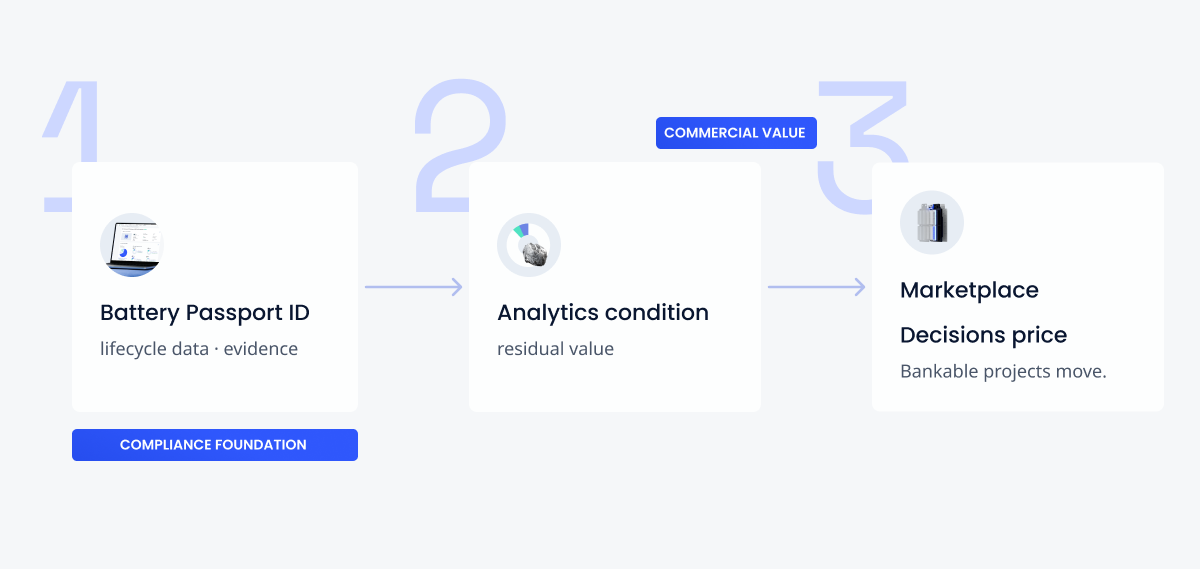
The passport provides the data foundation. The value comes from what companies can do with that data.
Circunomics' Approach: Connecting Passport Data to Marketplace Decisions
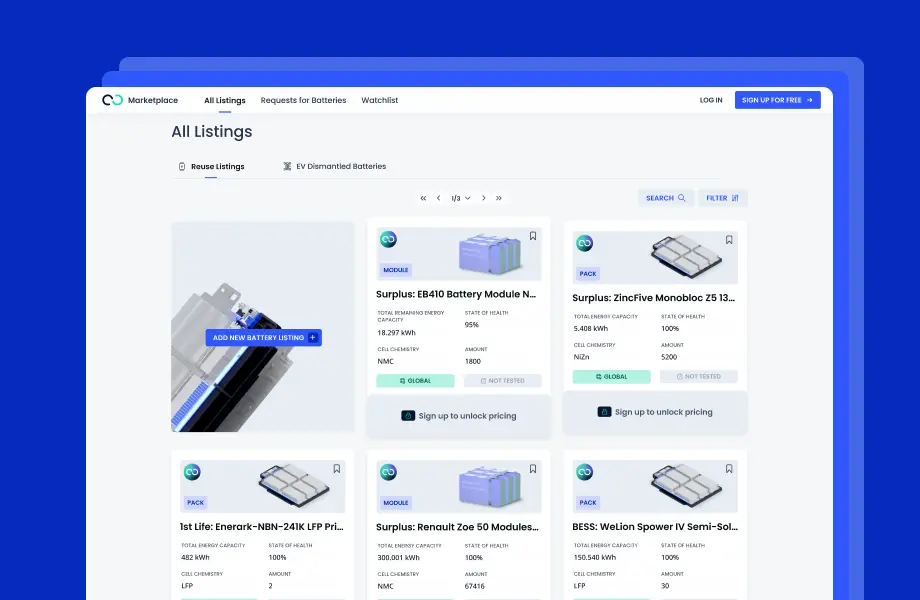
For Circunomics, the Battery Passport is not a separate product sitting next to the B2B Battery Marketplace. It supports B2B battery marketplace compliance making battery transactions more transparent and easier to assess.
That sounds simple, but it matters. A passport only helps when it connects data to real decisions. That means when a battery is listed, evaluated, priced, traded, reused or sent to recycling.
This is where Circunomics brings three parts together: the B2B Battery Marketplace, Battery Lifecycle Analytics, and compliance functions. The goal is not to create more documentation for its own sake. The goal is to make battery data easier to trust and easier to use.
Here is what that means in practice:
1. Keep battery lifecycle traceability connected
Battery data can easily become fragmented. One team holds manufacturing data. Another has usage history. A service partner may have test results.
A recycler may need end-of-life information later.
For Battery Passport readiness, these pieces need to stay connected to the battery as it moves through its lifecycle. That includes:
- Manufacturing and material data relevant to regulatory documentation
- Usage history and state of health information where available
- Compliance records, including documentation relevant to EPR, due diligence and end-of-life handling
Each time a battery is assessed, traded or moved into a second-life application, one rule applies. The next decision should build on existing data. Not start from scratch.
2. Put compliance into the transaction flow
Compliance becomes harder when it is handled at the end of a process. By then, data may be missing, responsibilities may be unclear, and documentation may need to be rebuilt manually.
Circunomics links compliance information to marketplace workflows. From asset onboarding and data checks to transaction documentation.
3. Add analytics where passport data stops
A Battery Passport can document important facts about a battery. But it does not automatically answer the questions buyers and operators care about most.
Is this battery still technically suitable for a second-life application? How should its condition influence price? What risks should a buyer consider before making an offer?
This is where the battery state of health analytics matters. State-of-health assessments, residual value models and digital twins turn lifecycle data into clear insights. These insights support valuation, routing and transaction decisions.
The passport provides part of the evidence. Analytics help make that evidence useful.
4. Make data easier to share across handovers
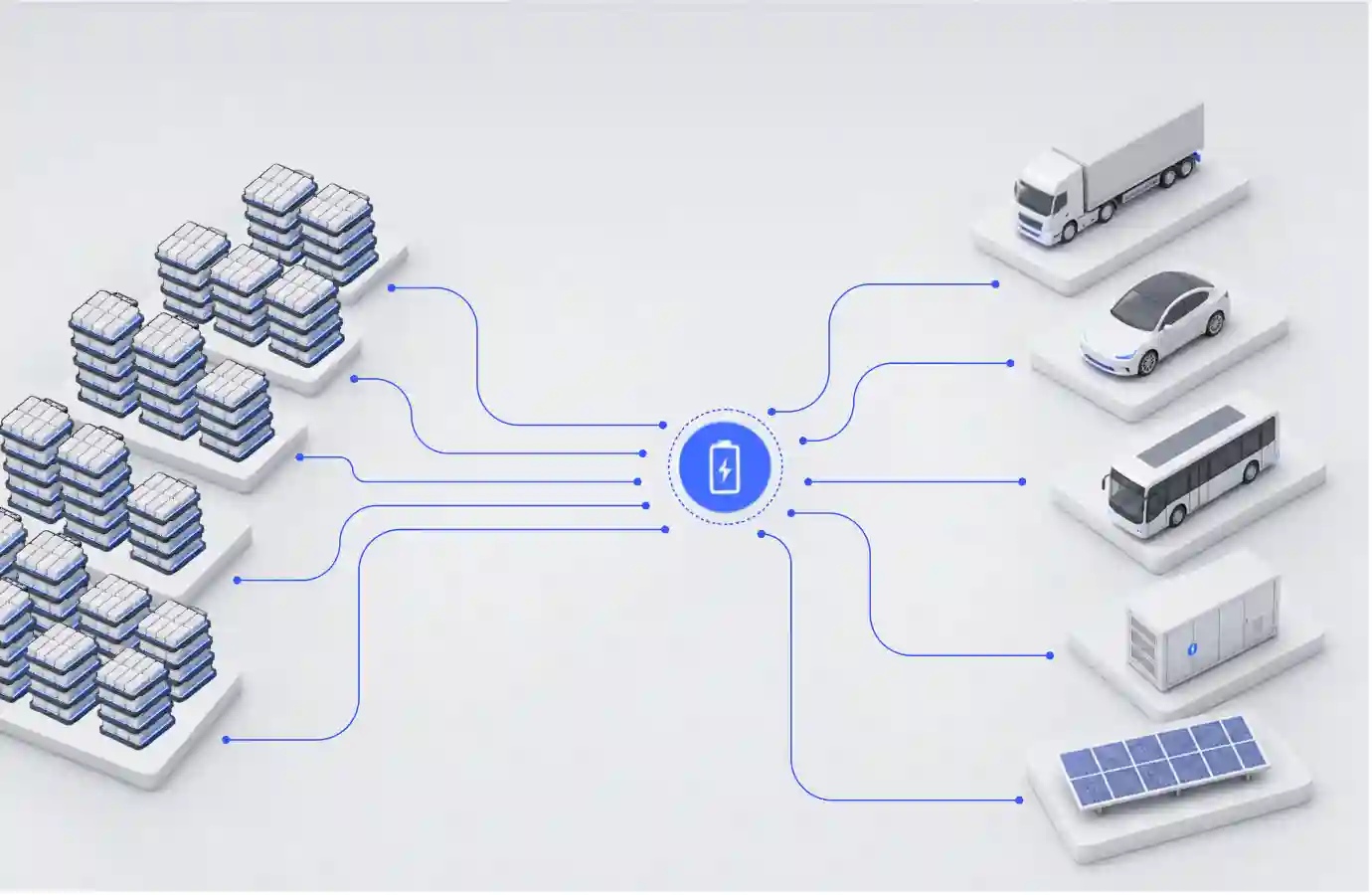
Batteries move between many parties: manufacturers, operators, buyers, service providers, and recyclers. Each handover creates a risk that information is lost, duplicated, or interpreted differently.
The Battery Passport is meant to support data exchange across this ecosystem. Circunomics links relevant information to the asset and makes it easy to share with the right stakeholders when needed.
The value is not another isolated record. The value is a clearer data trail that supports commercial and regulatory decisions across the battery lifecycle.

Why "Foundation, Not Fantasy" Matters
Treating the Battery Passport as a foundation rather than a growth engine has strategic implications:
It Focuses Investment on What Drives Transactions
Building a passport system is necessary. But it's not what drives marketplace liquidity, pricing transparency, or financing confidence. Those outcomes depend on battery state of health analytics, transaction infrastructure, and ecosystem integration.
When the passport is treated as embedded infrastructure, investment stays focused on what moves batteries through the market. That means analytics, transaction workflows and compliance processes.
It Aligns with How Buyers and Operators Think
Fleet operators and BESS developers do not evaluate batteries on passport availability alone. They buy batteries because the condition is verified, the price is competitive, and the compliance risk is managed.
The passport supports those decisions. It doesn't replace them.
It Prepares for Scale Without Over-Engineering
In 2026, passport adoption will be uneven. Some batteries will have complete lifecycle data. Others will have gaps.
The aim is to support real transactions while data quality improves, not wait for perfect data before the market can move.
Industry Implications: What This Means for Your Team
Are you an OEM, fleet operator, BESS developer or recycler? Here is what to focus on for Battery Passport implementation in 2026:
1. Don't Build Passport Infrastructure in Isolation
The passport is part of a broader data and compliance ecosystem. Ensure that your passport system integrates with:
- Your asset management and ERP systems
- Your battery state of health analytics and monitoring tools
- Your EPR and sustainability reporting workflows
- Your transaction and resale processes
A standalone passport system leads to duplicated data entry, compliance gaps and missed second-life opportunities.
2. Prioritise Data Quality Over Data Volume
A complete passport with inaccurate state-of-health data is worse than a partial passport with verified condition assessments. Focus on capturing the data points that matter for operational decisions:
- chemistry
- usage history
- thermal events
- cycle counts
ensure they're accurate and auditable.
3. Prepare for Interoperability
The passport is designed to be shared. Your system should export data in standardised formats. It should also integrate with third-party platforms and support data exchange with recyclers, regulators and buyers.
Proprietary, closed systems will create friction and limit your ability to participate in the broader battery market.
4. Treat Compliance as Continuous, Not One-Time
The passport isn't something you create once and forget. It's a living record that updates as the battery moves through its lifecycle. Ensure that your workflows support continuous data capture, regular updates, and seamless handoffs when ownership or custody changes.

Actionable Recommendations
Based on Circunomics' work across battery transactions, analytics and compliance, here are three steps to take in 2026:
1. Audit Your Current Data Capture Processes
Identify where lifecycle data is captured manufacturing systems, telematics, service records, recycling logs and map it against the Battery Passport data requirements EU mandates. Flag gaps and prioritise the data points that support both compliance and commercial decisions.
2. Integrate Passport Preparation into Your Transaction Workflows
Planning to sell, lease or redeploy batteries? Make sure passport data is captured and validated before the transaction. Leaving this until late in the transaction process can create delays, increase compliance risk and reduce buyer confidence.
3. Partner with Platforms That Treat Compliance as Infrastructure
Look for partners and platforms that integrate passport functionality into broader transaction, analytics, and compliance systems. Standalone passport tools may tick the regulatory box. But they won't help you trade batteries, assess second-life potential or manage EPR obligations efficiently.
Strategic Outlook: Where the Battery Passport Fits in the Circular Economy
The DBP is a critical enabler of the circular battery economy. It creates transparency and supports battery lifecycle traceability. It ensures data needed for recycling, second-life deployment and due diligence is captured and accessible. This is how the Battery Passport supports the circular economy at scale.
But it's not the circular economy itself.
The circular economy is built on transactions. Batteries move from first use to second life, from operators to recyclers, from manufacturers to integrators. It's built on trust: buyers confident in condition data, financiers confident in residual value, and regulators confident in compliance.
The passport provides the data foundation. Platforms like Circunomics provide the tools that turn data into action. That includes transaction infrastructure, battery state of health analytics and compliance workflows.
In 2026, companies will be better positioned by treating the Battery Passport for what it is. Necessary infrastructure that enables value creation but does not replace it.
Foundation, not fantasy.
FAQ
What is a Digital Battery Passport and when does it become mandatory?
A Digital Battery Passport (DBP) is a structured digital record required under the EU Battery Regulation. It must accompany EV batteries, LMT batteries, and rechargeable industrial batteries above 2 kWh placed on the EU market. The Digital Battery Passport 2027 mandate takes effect on 18 February 2027. It is a condition for EU market access for all relevant battery categories.
What data must be included in an EU Battery Passport?
From February 2027, EV, LMT and industrial batteries will require a Digital Battery Passport. The Battery Passport data requirements EU mandates cover six key areas:
- A unique persistent identifier
- Manufacturing and material composition data
- Carbon footprint information
- State of health and expected lifetime
- Dismantling and recycling instructions
- Supply chain due diligence information
Does a Battery Passport create commercial value on its own?
Not on its own. Battery Passport EU compliance establishes the data foundation. But commercial value comes from integration.
That means battery state of health analytics, residual value models and transaction workflows. The passport enables value; it doesn't generate it independently.
How does the Battery Passport support second-life battery decisions?
The passport provides structured lifecycle data including state of health and usage history to help assess battery suitability. Is it ready for a second-life application, or should it go to recycling? Second-life battery compliance EU requirements also demand analytics and condition verification. The passport alone cannot capture all of this.
What do fleet operators and BESS developers need to do to prepare for Battery Passport compliance in 2026?
Battery Passport implementation in 2026 means capturing lifecycle data continuously not just at the point of manufacture. Fleet operators and BESS developers should integrate passport preparation into their asset management, EPR reporting and transaction workflows. They should also prioritise platforms that connect compliance with battery lifecycle traceability and commercial decision-making
Ready to integrate Battery Passport compliance into your battery operations?
👉 Explore how Circunomics connects compliance, analytics, and transactions in one platform.