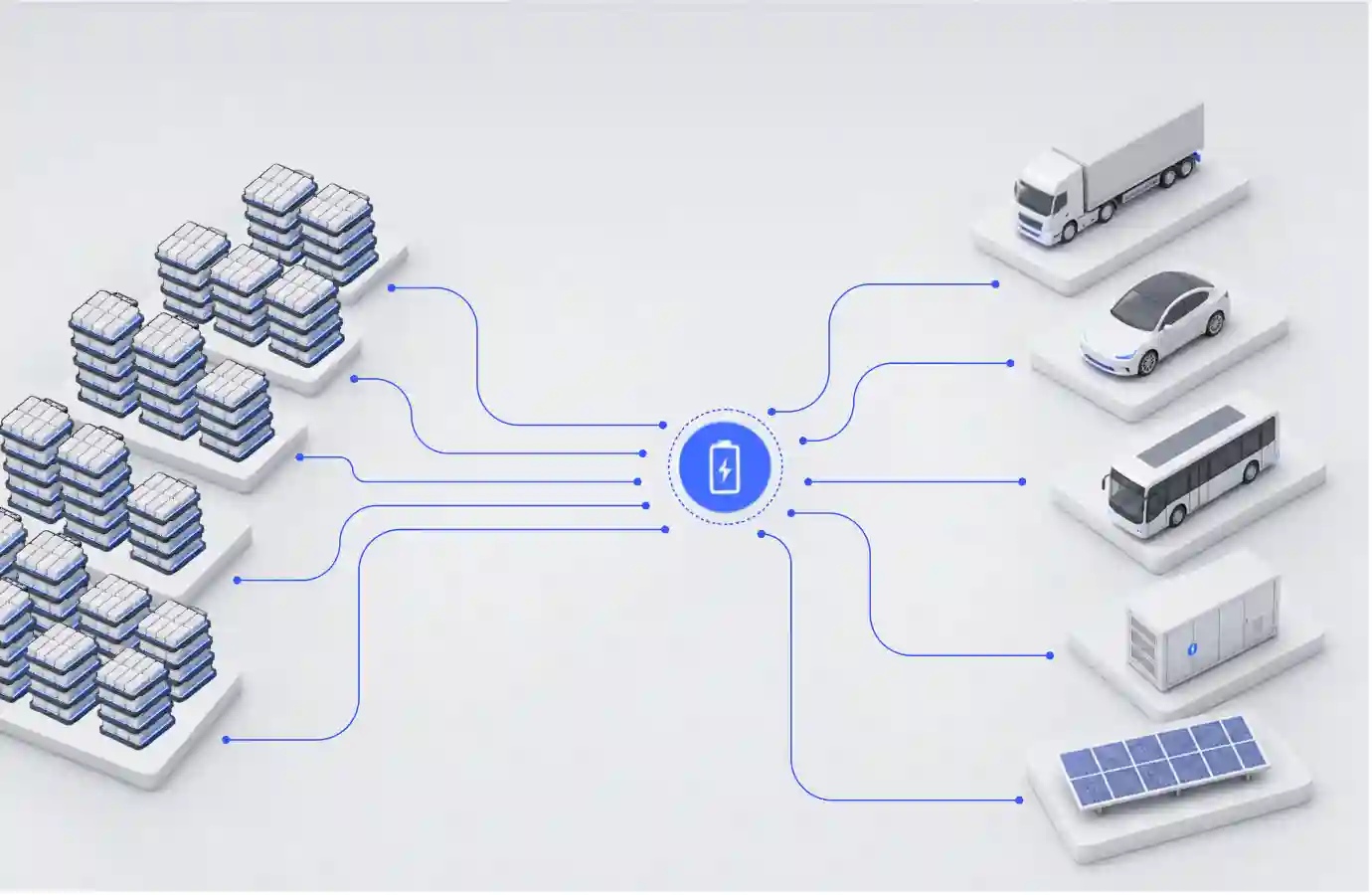
Battery supply is not the same thing as battery access.
For many buyers, access breaks down long before availability. For battery buyers in Europe, the gap between available supply and real access is a persistent market problem today.
Suppliers still build pricing and supply around volume commitments that leave most smaller buyers out.
Everyone overlooks that gap, all the time. The market talks about capacity, investment, growth, and strategic autonomy.
Buyers still face the same business problems: long lead times, order sizes that are too large, and supply talks built for bigger companies.
In e-mobility, BESS, and manufacturing, small and mid-sized buyers have the same problem every time they source batteries in Europe. They may need cells, modules, or packs for a real project with a near-term timeline.
They may be flexible on format or chemistry. They may not need a long-term automotive-style supply agreement. They need a sourcing path that fits the way they actually buy.
Europe's Battery Market Is Growing. That Does Not Solve the Buying Problem on Its Own
Europe has made batteries a strategic industrial priority for years. The European Commission has often called batteries and storage a key net-zero technology area. It is also part of a wider push to cut strategic dependencies in clean-tech supply chains.
That does not mean every buyer now has an easy time sourcing what they need.
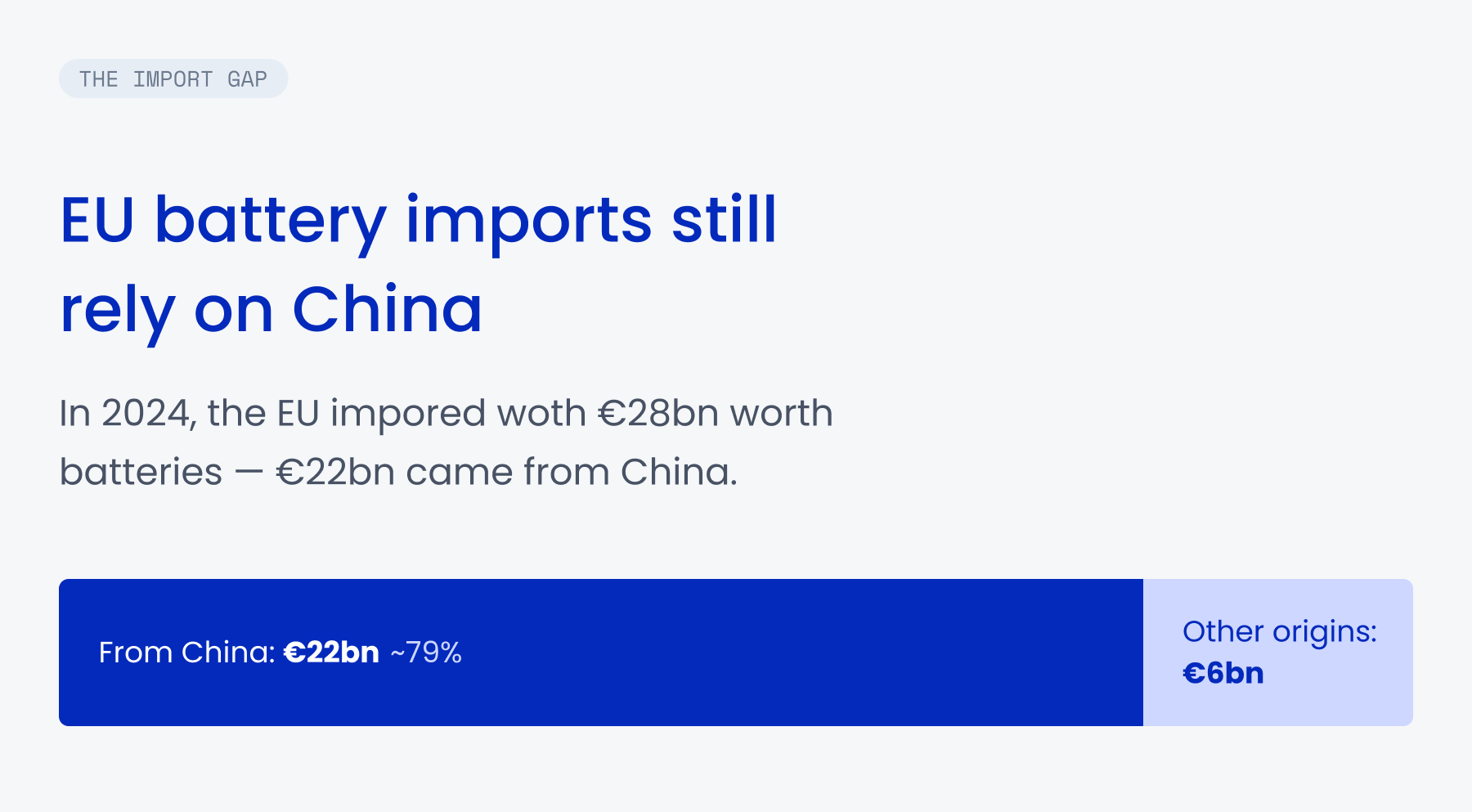
A recent EU impact assessment made the imbalance clear. In 2024, the EU imported about EUR 28 billion in batteries. About EUR 22billion came from China.
That is a resilience story at the policy level. It is also a direct concern for battery supply chain resilience in Europe.
For most companies, it explains a simple reality: many buyers still source from Asia because finding a simpler alternative is not easy.
Supply channels in Europe serve high-volume buyers first. Smaller teams sourcing batteries project by project rarely get the same access.
The Issue Is Often Fit, Not Demand
Most supplier conversations start with large Original Equipment Manufacturers (OEMs) and high-volume buyers in mind, not smaller companies.
That leaves out a big part of the market.
Smaller buyers do not plan quarters ahead. They buy project by project and need procurement to keep up. They are not trying to secure maximum volume. They are trying to secure the right volume, on a timeline that still works, with enough clarity to make a commercial decision.
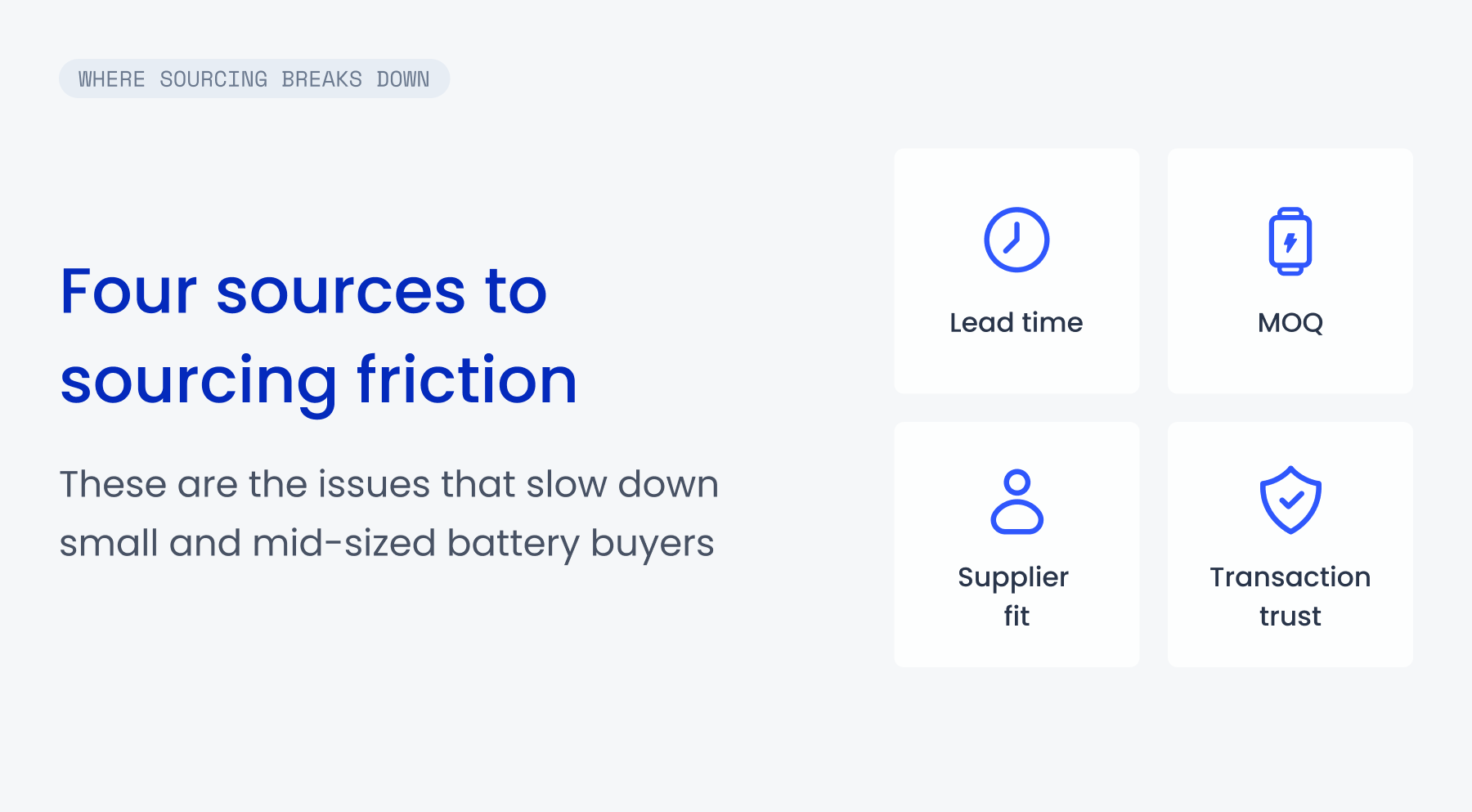
Minimum order quantities (MOQ) for batteries in Europe often get in the way early. A buyer may have a clear use case and real demand, but the available volume is still too large to make sense commercially.
For smaller buyers in Europe, MOQs block access more than anything else. The demand is there, but the minimum volume almost never fits the project.
Where Sourcing Still Breaks Down
The First Issue Is Time
Long lead times work when procurement is planned ahead and volumes are predictable. For industrial battery buyers, smaller mobility projects, and customer-driven builds, they rarely are.
The Second Issue Is Volume
Having a clear use case and a real budget is not always enough. When MOQs do not fit the project, they stop being a supplier condition and become a barrier to entry.
For e-mobility and BESS battery sourcing in Europe,MOQs are not just a supplier condition, they are a barrier. The demand is there. The volumes just do not fit.
The Third Issue Is Trust
Alternative sourcing only works when buyers know what they are getting, how the process works, and who they are dealing with. In a B2B battery marketplace in Europe, trust is not about volume. It comes from structured transactions, verified counterparties, and clear product information.
Battery markets are different. Technical, regulatory, and logistics questions come up early — and buyers need clear answers before they commit. Circunomics helps reduce that uncertainty through structured transactions, Battery Pass-enabled product information, and a Marketplace built around verified customers and suppliers.
Regulation Is Adding Pressure, Even When It Is Not the Main Reason Buyers Start Looking
The commercial pain usually shows up first. Regulation is still moving into the background of these decisions.
Regulation (EU) 2023/1542 sets a clear deadline: from 18 February 2027, battery passport compliance is mandatory for EV batteries, light transport batteries, and industrial batteries above 2 kWh sold in the EU.
Teams that build documentation into their battery procurement process in Europe now will be ready when the Digital Battery Passport becomes mandatory.
That does not mean every sourcing conversation should start with compliance.
For most buyers, it will not. But the direction is clear. Battery traceability EU regulation is moving the market toward a standard where documentation, product information, and traceability matter more than they used to.
Circunomics supports this shift through Battery Pass-enabled product information, helping buyers work with clearer battery data from the start rather than adding complexity later.

A Better Supplier Conversation Starts Somewhere Else
Most small and mid-sized buyers are not looking for a grand strategic partnership on day one.
They are looking for answers to simpler questions:
- Can we get access to the right cells, modules, or packs?
- Can we buy volumes that fit the project?
- Can we move fast enough to keep the opportunity alive?
- Can we trust the transaction and the information behind it?
Those questions are commercial and operational. They are also where a lot of sourcing friction still sits.
A better supplier conversation starts there — not with scale for the sake of scale.
One way to change that dynamic is to decouple pricing and access from individual buyer volume. Battery demand aggregation in Europe pools orders across buyers, so smaller companies get manufacturer-level pricing and stable supply without OEM-scale volume commitments.
What Buyers Are Really Looking For
The strongest offer is often not "more battery supply." It is a more workable way to buy it.
That usually means:
- Access to competitively priced inventory withoutOEM-level volume commitments
- Volumes that match real project demand, not supplier constraints
- Supply access across Europe and Asia through one channel
- Structured transactions with clearer information and fewer loops
- Access to surplus and overstock battery inventory in Europe at competitive prices, without long procurement cycles
Teams sourcing battery cells, modules, or packs in Europe do not always need new supply. Battery overstock inventory is a practical, faster option for buyers with near-term project timelines.
Second-life battery suppliers in Europe are a credible option for BESS and industrial buyers. Where performance requirements allow, reused inventory is a real alternative.
This is also where Europe's policy direction and the buyer's day-to-day reality start to meet. The Net-Zero Industry Act battery procurement criteria are pushing resilience into procurement and support schemes for relevant clean-tech components, including batteries and storage. That is a policy signal toward more diversified and resilient supply chains. Buyers do not need to read the Act to feel the effect of that shift.
A More Workable Way to Buy Batteries
For many small and mid-sized buyers, the friction starts long before price negotiations. The requirement may be clear, the project may be real, and the budget may be there.
But then it stalls. Volumes do not fit. Feedback is slow. The sourcing set up is too rigid for the actual need.
Price is part of the same problem. Buyers without direct manufacturer access often pay higher spot prices while still facing uncertainty on supply. That combination is what makes many sourcing set ups commercially difficult to sustain.
Teams sourcing battery cells, modules, or packs in Europe deal with two problems at once: high spot prices and rigid supply structures. Without a more flexible sourcing channel, project pipelines stall.
How to source batteries in Europe as a smaller buyer comes down to this, find a channel that does not tie access to volume and delivers structured product information from day one.
For many teams, that also means working through one structured channel instead of managing multiple supplier conversations across formats, regions, and requirements.
Battery demand aggregation in Europe reduces that complexity by consolidating sourcing across buyers so smaller companies access better pricing and supply stability without the overhead of managing multiple supplier relationships.
👉Sourcing cells, modules, or packs in Europe or Asia and running into minimum order quantities for batteries, high prices, or slow procurement cycles? Schedule a 20-minute call with Samuel Lattarulo to discuss your current requirements.
FAQ
What do small and mid-sized buyers need to know about battery sourcing in Europe?
Battery sourcing in Europe works differently for small and mid-sized buyers than it does for large OEMs. Most suppliers still build their channels around high-volume commitments and long-term agreements that smaller buyers cannot meet. The result isa market where supply exists but workable access does not.
Small and mid-sized buyers in e-mobility, BESS, and manufacturing need a sourcing channel that separates access from volume one that provides structured product information, flexible order sizes, and procurement timelines that match project-based demand rather than automotive-scale supply agreements.
How do minimum order quantities affect battery procurement in Europe for smaller buyers?
Minimum order quantities are one of the biggest barriers in battery procurement in Europe for smaller buyers. A buyer may have a clear project, a real budget, and a defined technical requirement but the minimum volume is still too large to make commercial sense.
For teams sourcing battery cells, modules, or packs inEurope, MOQs designed for large OEMs do not translate to project-based demanding e-mobility, BESS, or industrial applications. Battery demand aggregation in Europe addresses this directly, pooling orders across multiple buyers so smaller companies access manufacturer-level pricing and stable supply without needing OEM-scale volume commitments.
How does theEU battery regulation affect battery traceability and sourcing decisions inEurope?
EU battery regulation traceability requirements are already shaping how buyers evaluate sourcing partners in Europe. Under Regulation (EU) 2023/1542, battery passport EU compliance becomes mandatory from 18 February 2027 for EV batteries, light transport batteries, and industrial batteries above 2 kWh sold in the EU.
For teams managing battery procurement in Europe, this means traceability and structured product information are becoming baseline sourcing requirements, not just compliance checkboxes. Teams that build documentation into their battery procurement process in Europe now will have fewer compliance gaps when the Digital Battery Passport becomes mandatory.
What is battery demand aggregation and how does it help smaller buyers access better pricing in Europe?
Battery demand aggregation in Europe pools orders across multiple smaller buyers so they can collectively meet volume thresholds that would otherwise only be accessible to large OEMs. For small and mid-sized buyers sourcing battery cells, modules, or packs in Europe, this means access to manufacturer-level pricing and more stable supply without committing to volumes that do not fit the actual project. It directly addresses the two most persistent barriers in
European battery procurement minimum order quantities that are too large and spot prices that are too high for buyers without direct manufacturer access. For e-mobility battery sourcing in Europe and industrial battery procurement, demand aggregation is one of the most practical ways to close that gap.
Where can smaller buyers find surplus and overstock battery inventory in Europe at competitive prices?
Battery overstock inventory in Europe is a growing sourcing option for smaller buyers particularly for teams with near-term project timelines who cannot wait for long procurement cycles. Second-life battery suppliers in Europe are also a credible alternative for buyers in BESS and industrial applications where performance requirements allow for reused inventory.
The key is finding a structured B2B battery marketplace in Europe where inventory comes with verified product information, clear battery traceability, and transparent pricing. Unstructured surplus markets risk incomplete documentation, unclear thermal history, and no chain of custody. A structured B2B battery marketplace in Europe gives buyers access to competitive surplus and overstock inventory without the documentation gaps that create downstream liability.