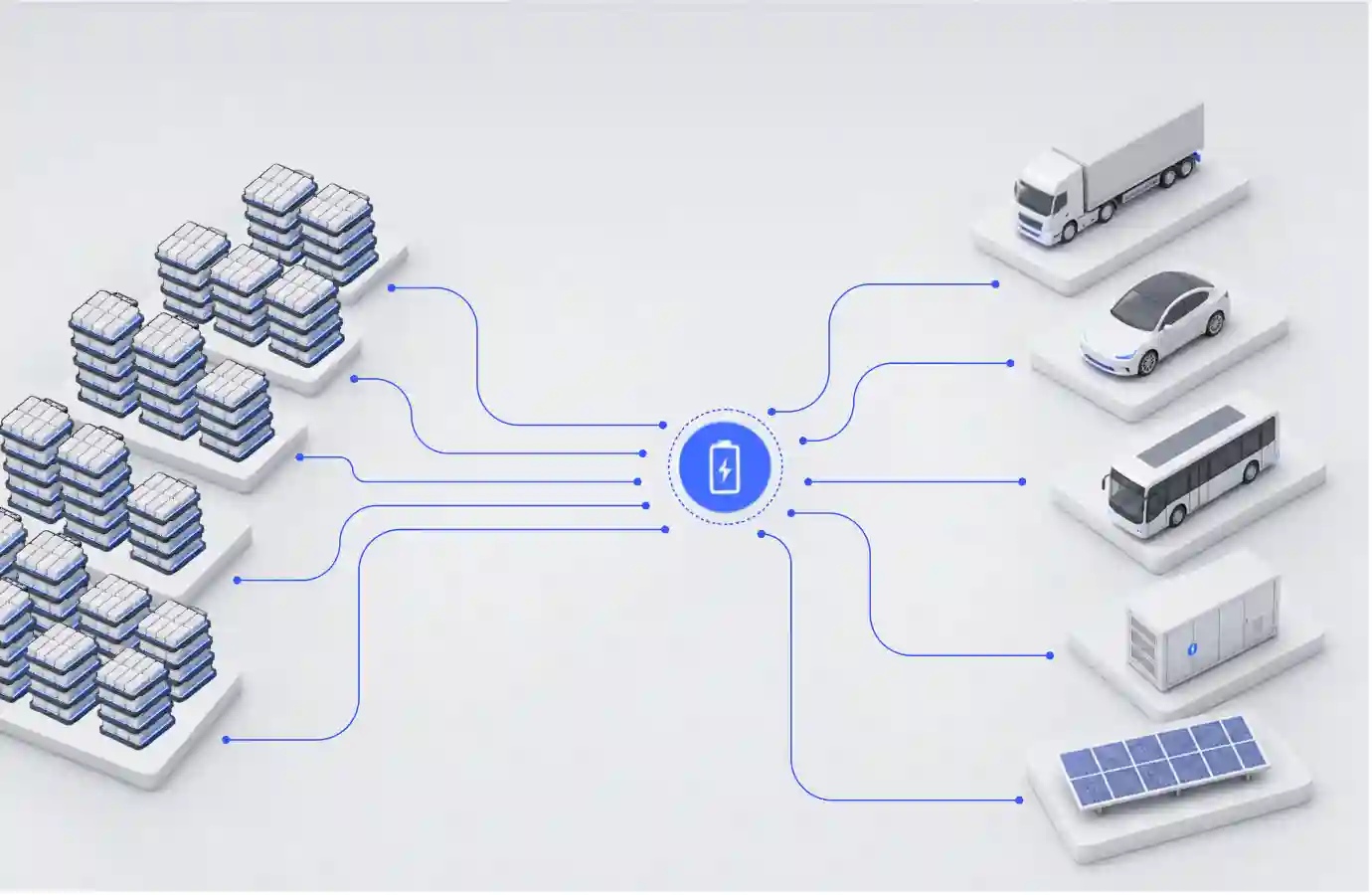
Trading battery modules, cells and packs shouldn’t be a scavenger hunt, but it often is. There’s demand on both sides. But offers aren’t always easy to compare.
Condition data isn’t always clear. It can take time to confirm the counterparty. It can also take time to confirm compliance and logistics details.
If your company is new to B2B battery trading, this guide is for you.
It is especially useful for teams working with second-life modules and packs. In these deals, conditions and documentation can make or break a transaction.
Whether you want to learn B2B battery trading, move surplus battery modules, or source second-life modules, this guide helps.
It covers the full battery trading process, step by step, from registration to a completed deal.
Already know you want in? Skip the reading and go straight to the platform
👉 Register on Circunomics - it's free to get started!
The traditional process (and why it’s slow)
In many battery transactions today, the friction isn’t one big obstacle, but rather a pile of small ones.
1) Too little transparency for used and surplus batteries
Secondary markets for batteries are growing fast. Companies now trade more batteries after their first use — for second-life applications or recycling. But one challenge keeps coming up: it's hard to compare like-for-like.
A seller can describe two very different lots as 'used modules'. Condition and measurement history can vary hugely between them.
Buyers and sellers need to assess battery condition and residual value in a consistent way. Without that, pricing slows down and becomes uncertain. And when pricing is uncertain, investment and purchasing decisions get harder.
2) Deals stall on missing or inconsistent information
When listings or offers are built ad hoc, buyers tend to spend time just getting to baseline clarity:
- What exactly is being offered (chemistry, format, lot structure)?
- What condition data exists (e.g., SoH, usage history)?
- What does the documentation cover and what does it leave out?
3) Trust and qualification happen from scratch every time
Without a structured environment, each deal requires re-checking:
- Who is the counterparty?
- Can they execute the transaction reliably?
- Are the compliance and documentation expectations understood?
4) Compliance and logistics become late stage “surprises”
For batteries, late surprises are expensive. Most shipping scenarios classify lithium batteries as dangerous goods. This means packaging, labeling, and documentation must all match the specific classification and shipment setup.
Industry guidance makes this clear. IATA's lithium battery guidance and dangerous goods documentation resources show just how much process detail is required to get a shipment accepted and moved safely.
Regulators classify some batteries as waste. When that's the case, cross-border movement triggers additional controls. Globally, the Basel Convention sets the framework for hazardous waste movements — including specific requirements around movement documentation.
Basel Convention battery waste Europe obligations are particularly relevant for companies operating cross-border within or beyond the EU. (Specific obligations depend on classification, route, and national rules.)
Commercial alignment between buyer and seller is a good start. But it's not enough. A weak process stops deals from closing. Batteries must be comparable, tradable, and operationally executable for transactions to move forward.
How structured battery trading works differently
A structured B2B market doesn’t claim batteries are simple. It accepts they’re complex, and then builds the process to handle that complexity consistently.
In practical terms, structured trading infrastructure focuses on three building blocks:
1) Verified participants
The goal is not exclusivity, but transaction quality: less noise, fewer dead ends, and clearer accountability.
2) Standardized, comparable listings
Consistent listing standards make a real difference. Buyers can compare opportunities faster. Sellers stop re-answering the same baseline questions deal after deal.
3) A clear end-to-end deal flow
A repeatable path from onboarding → listing/search → negotiation → close reduces handoff friction between commercial, technical, and operational teams.

Step-by-step
Step 1: Registration
The battery trading registration process is the entry point to any structured marketplace. Registration should quickly establish:
- Who you are (legal entity + accountable contacts)
- Whether you buy or sell
- What you trade (modules, packs, cells)
Practical tip: Assign a single internal owner for deal flow. Fast response times matter more than most first-time participants expect.
Step 2: Onboarding – capture the essentials in a quality-assured way
Onboarding is where the foundational work happens. Structured trading environments capture key company and battery information in a consistent, quality-checked way. This means the rest of the transaction doesn't have to rely on improvisation.
Done well, onboarding reduces case-by-case firefighting. Fewer missing details. Fewer misunderstandings. Compliance, logistics, and internal stakeholders no longer trigger late-stage pauses.
Onboarding typically aligns on:
- Asset categories and intended pathways (first-life, second-life, end-of-life)
- What “good enough” documentation looks like for your deal types
- How condition and value information will be represented (where available)
Step 3: Listing (seller) or searching (buyer) – make batteries comparable
If you’re selling modules/packs for second-life: What a strong listing includes
A listing that gets to negotiation faster usually covers:
A) Identification & structure
- Chemistry and format (module vs pack)
- Lot structure (uniform lot vs mixed)
- Quantity, location, readiness date
B) Condition & evidence
- What condition indicators exist (e.g., SoH results, test reports, usage history)
- When data was measured, and at what level (module/pack)
- What is unknown (explicitly)
Battery State of Health is a key factor in second-life suitability. Clear SoH data, test methodology, and measurement level make a direct difference. They reduce friction and accelerate deal qualification.
C) Operational reality
- Packaging/handling notes
- Logistics assumptions
- Documentation status (available now vs available before shipment)
If you’re buying: Define acceptance criteria before contacting sellers.
Buyers close faster when they state up front:
- Chemistry/form factor requirements
- Minimum performance/condition thresholds and acceptable proof
- Geography and lead-time constraints
- Documentation requirements that are non-negotiable
This is how you reduce wasted cycles on “almost fits.”
Step 4: Verification – what “verified counterparties” means in practice
In everyday terms, verification is a way to reduce two predictable risks:
- Identity risk: Is the organization real and accountable?
- Execution risk: Is the organization able to complete this kind of transaction?
It doesn't replace due diligence. But it does eliminate the conversations that were never going to become a deal.
Step 5: Negotiation – align on the deal mechanics before price
Most battery negotiations go smoother when you align early on:
- Inspection/testing approach (who, when, methodology)
- Acceptance criteria and remedies if results differ
- Documentation responsibilities
- Timeline and logistics scope
- Payment terms and risk controls
Standardized information doesn’t eliminate negotiation but makes it more specific and less speculative.
Step 6: Close – make the transaction operational and auditable
Closing is where an agreed deal becomes an operational handover. At this stage, parties typically align on:
- Final lot definition (what exactly is included) and handover steps
- Documentation package (what’s delivered, by whom, and by when)
- Logistics readiness (packaging, labeling, carrier requirements, and timeline)
Battery transactions often involve safety and compliance requirements. Settle these points before commercial terms are on the table. It prevents last-minute delays and rework.
What standardized listings enable: Comparability, speed, clarity
Standardized listings aren’t about forcing every battery into the same box. They’re about ensuring buyers and sellers share a consistent baseline that enables:
- Comparability (shortlisting without detective work)
- Faster qualification (fit/non-fit becomes obvious)
- Cleaner handovers (commercial ↔ engineering ↔ operations)
- Fewer late surprises (especially around condition evidence and documentation)
Real scenarios: Selling surplus modules vs sourcing second-life packs
Scenario 1: How to sell surplus battery modules B2B (the “comparability” challenge)
You have surplus battery modules (e.g., from inventory, project changes, or returns). You need a buyer who can evaluate fit quickly. This is one of the most common starting points for companies entering surplus battery trading in Europe.
Where it slows down traditionally
- Mixed lots described inconsistently
- Condition data scattered or hard to interpret
- Repeated qualification calls with buyers who can’t execute
What a structured process changes
- Consistent listing fields reduce ambiguity
- Condition evidence is surfaced early (or the lack of it is explicit)
- Serious counterparties can move to negotiation faster
Scenario 2: Buying second-life packs for a specific application (the “evidence” challenge)
You need packs/modules for a defined second-life use case. Your risk is not only price, but also mismatch: wrong conditions, wrong documentation, wrong constraints. Used battery modules for sale vary widely in quality — without standardized data, sourcing becomes guesswork.
What a structured process changes:
- You can filter/search against consistent criteria
- Negotiation focuses on the real open points (testing, acceptance, timeline)
- You reduce the chance of late-stage rework
EU Battery Trading Compliance: What You Need to Know
EU battery trading compliance is an increasingly important factor for any company operating in the European secondary battery market.
The EU Battery Regulation (2023/1542) changes the rules for listing, transferring, and reporting batteries. It introduces traceability, documentation, and due diligence requirements that apply across the entire value chain
Key compliance considerations for battery trading in Europe include:
- Battery Passport requirements: From 2027, industrial and EV batteries above certain thresholds must carry a digital Battery Passport. It captures lifecycle data, chemistry, and performance history
- Dangerous goods classification: Lithium batteries in transport are subject to ADR (road), IMDG (sea), and IATA (air) regulations. Documentation must match the specific classification and shipment setup.
- Basel Convention battery waste Europe: Batteries classified as waste don't move freely across borders. Cross-border shipments require two things: prior informed consent procedures and movement documentation. The Basel Convention and the EU Waste Shipment Regulation mandate both.
- Extended Producer Responsibility (EPR): Producers and importers placing batteries on the EU market have clear obligations. They must register and report under the national EPR scheme that applies to their market.
Compliance isn't a final step. It's part of the process from the start. That's what separates fast, repeatable transactions from costly delays.
When to use structured infrastructure vs direct relationships
Use structured trading infrastructure when:
- You’re new to battery trading (or a new asset type)
- You need speed and repeatability
- You want standardized information and fewer “unknowns”
- You have multiple internal stakeholders and need clean handoffs
Direct relationships are often enough when:
- You have repeat flows with stable specs
- You already have a mature internal process for qualification and documentation
- You’re doing highly bespoke, integrated transactions
Many teams use both: Direct relationships for core flows, structured infrastructure to expand options and improve transaction quality.
Getting Started with Circunomics: The B2B Battery Trading Platform for Europe
Finding the right battery trading partner is hard. Verifying credentials, getting comparable condition data, and staying compliant at the same time makes it harder. Circunomics exists to solve exactly that problem.
Circunomics is a dedicated B2B battery trading platform built for Europe and global markets. It covers the full battery lifecycle — from surplus and second-life modules to end-of-life packs.
It is not a generic marketplace. It is a structured trading environment. Circunomics designs every participant, listing, and transaction to meet the complexity of the battery industry head-on.
Here is how Circunomics handles each challenge:
- Uses standardized listing fields across chemistry, format, lot structure, State of Health data, and documentation status. Every listing on the platform follows the same structure. Buyers can shortlist and qualify faster — without chasing basic information.
- All participants on the Circunomics platform go through a verification process covering business identity and transaction suitability. This reduces noise, eliminates unqualified counterparties, and means the conversations you have are the ones worth having.
- Integrates Battery Lifecycle Analytics directly into the trading workflow. This includes State of Health assessments, residual value models, degradation curves, and digital twins. Together, they give buyers and sellers a shared, trusted data foundation for battery State of Health trading
- Links regulatory requirements directly to transactions. This includes Battery Passport infrastructure, EU battery regulation compliance support, and documentation workflows. These cover dangerous goods, waste shipment controls, and traceability requirements. Circunomics integrates all of it directly into the deal flow — not as a late-stage addition.
- Circunomics designs the battery trading registration process to get you operational quickly. Register, onboard, and you're ready to list surplus battery modules, search the second-life battery marketplace, and connect with verified buyers and sellers. One platform. One structured environment.
What the platform combines
- Trade execution: End-to-end deal flow from listing to close, with structured negotiation and documentation handover
- Battery Lifecycle Analytics: State of Health assessments, residual value models, and digital twins that make condition data comparable and bankable
- Compliance & Battery Passport infrastructure: Regulatory documentation, traceability, and EU Battery Regulation alignment built into every transaction
- Verified participant network: A B2B network of battery sellers, buyers, recyclers, and logistics partners across Europe and beyond
Ready to explore opportunities, move surplus inventory, or source second-life modules?
Get your organization ready for the right deal — through a structured, compliant process.
FAQ
What does “verified counterparty” mean in battery trading?
It typically means the platform checks participants for business identity and basic suitability. This raises transaction quality and accountability. It reduces noise; it doesn’t replace transaction-specific due diligence.
What information should a second-life module/pack listing include?
At minimum, a strong listing includes: chemistry, format, lot structure, quantity, location, and timeline. Be clear about condition evidence — and equally clear about what data is missing. Condition and remaining performance/SoH strongly influence second-life suitability.
Why do standardized listings matter in B2B battery trading?
They make opportunities comparable, reduce clarification loops, and help deals move from interest to executable terms faster. The more teams involved — commercial, engineering, operations — the more this matters.
How do EU and global regulations affect battery trading?
Not all battery transactions carry the same documentation and traceability requirements. In the EU, expectations are rising — and cross-border waste movements can trigger formal controls.
The Basel Convention establishes global procedures and movement documentation requirements for hazardous waste shipments. EU battery trading compliance requirements continue to evolve under the EU Battery Regulation 2023/1542.
How do I start trading batteries B2B?
The fastest way to start trading batteries B2B is to join a structured battery trading platform like Circunomics. Register your organization and complete onboarding. From there, list surplus battery modules, search for second-life battery modules, and connect with verified counterparties across Europe.
Where can I find used battery modules for sale in Europe?
Used battery modules for sale in Europe are available through the Circunomics second-life battery marketplace. Every listing follows a standard.
Circunomics verifies every participant. The platform presents condition data clearly and consistently. This makes it significantly faster to find, qualify, and close deals compared to ad hoc sourcing.