Across Europe, one question still echoes through the battery industry and beyond: when a battery fails, who takes responsibility?
New rules from the European Union (EU) for batteries are here, and countries like Germany are changing their local laws to follow them. Companies know exactly what they must do. Producers carry the legal duty for every battery throughout its entire life cycle, from production to reuse and recycling.
"Regulation alone doesn't close the loop," said Felix Wagner, CEO of Circunomics. "What will define success is the ability to turn real time data into decisions, to show every battery's story from factory to recycling."
This affects everyone: companies, recyclers, politicians, and investors. It's not just about compliance; it's the final moment before Europe completely changes how it handles batteries.
Why Extended Producer Responsibility (EPR) Matters Now
Extended Producer Responsibility (EPR) shifts accountability from consumers and municipalities to the companies that profit from batteries. The EU Battery Regulation makes companies responsible for paying for the collection, transport, and recycling of batteries. They must also make sure every electric vehicle, e-bike, and industrial battery can be traced back to their own company.
By February 2027, large batteries will have a Digital Passport that tracks details like materials and carbon pollution. This change means following the rules is no longer about filing papers; it's about having strong digital computer systems.
What This Means for Your Industry
The European Union's new system impacts everyone: companies dealing with renewable energy storage, automotive rental companies, data centers, and recycling. It will directly affect their financial results. Producer Responsibility Organizations (PROs), OEMs, battery manufacturers, and even scrapyards must now navigate a complex web of digital reporting requirements.
For maritime, railway, and aviation sectors relying on portable batteries and specialized power systems, traceability is no longer optional. Energy intensive industry operators and renewable energy providers need to understand how Extended Producer Responsibility EPR transforms their supply chain management.
Insurance companies, investors, and city services need to understand how the Battery Regulation affects their responsibility and the value of their battery assets.

Three Takeaways That Turn Rules into Results
Behind the regulation lies a deeper story of how compliance, data, and market structure are evolving together. Surveys from the European Commission show that most businesses are still very early in preparing for digital changes. Many haven't even started dealing with the Digital Battery Passport yet.
This new paper highlights three key ideas about where big changes are already starting. It explains how companies can take the pressure from new regulations and use it to make positive practical steps:
1. Compliance Is Complex, But Early Movers Gain
Companies face multiple registries, fragmented reporting, and strict recycling targets. Those that digitize digital compliance now can turn risk into efficiency: faster reporting, lower costs, and stronger investor trust.
Digital twin technology enables based systems that track each physical object from production through end-of-life. For battery logistics providers, 2nd life testing facilities, and refurbishing companies, this creates new revenue streams and competitive differentiation.
2. The Digital Battery Passport Will Redefine the Market

From February 2027, each large battery will include a QR code linking to a standardized EU database. Batteries will become traceable, data-rich assets that enable predictive maintenance, second-life use, and closed-loop recycling.
Businesses like car workshops, fleet providers, and recycling plants are all affected by this change. They now need transparent data about a battery's life cycle to do their jobs correctly. The Digital Battery ecosystem transforms how OEMs, battery manufacturers, and 2nd life companies collaborate across the value chain.
3. Europe Must Secure Its Own Raw Materials
Without domestic refining capacity, Extended Producer Responsibility could turn Europe into a raw materials supplier for Asia. Implemented strategically, it can instead keep cobalt, lithium, and nickel in regional loops and strengthen circular economy value chains.
For energy companies, ship operators, and battery recyclers, this is a long-term chance to build strong, local supply chains. This will help reduce how much they rely on unpredictable global markets.
Countdown to Compliance: Critical Milestones
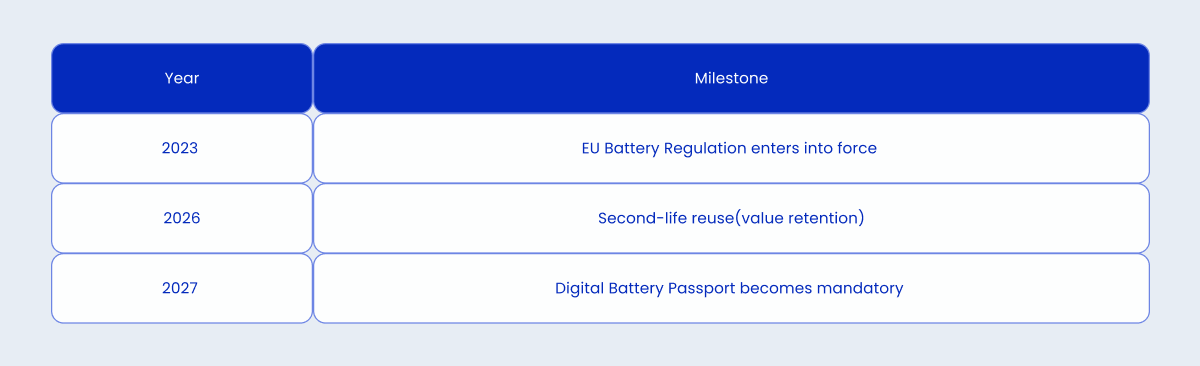
Companies across automotive, municipal services, data centers, and renewable energy sectors must prepare their digital infrastructure now to meet these deadlines.
Digital Compliance as Competitive Advantage
In the past, compliance meant avoiding penalties. Now it is about unlocking strategic value:
- Lower fees through better product designs and recyclability
- Priority access to recycled raw materials in a resource-limited market
- Stronger credibility with investors and regulators through auditable real time data
- New business models in reuse, second-life, and lifecycle analytics
- Reduced environmental impact through transparent carbon footprinting
For insurance companies evaluating battery risk, banks looking at green investments, and organizations managing compliance, using digital systems is no longer a choice. It is the only way to stay competitive in the future.
Industry-Specific Implications
For Energy & Renewables:
BESS & renewables operators and power providers must demonstrate battery sustainability credentials to secure permits and financing. The Digital Battery Passport provides the transparency investors demand.
For Transportation & Logistics:
Fleet managers, rental companies, trains, planes, and ships all need to see a battery's entire life history. This visibility helps them use batteries best and meet the rules for Extended Producer Responsibility (EPR) when the battery is finished.
For Battery Value Chain:
Battery makers, recyclers, and logistics companies that start using digital twin technology now will gain a competitive advantage. Getting these systems early is key to staying ahead.
For Infrastructure & Industry:
Companies like data centers have to track all their industrial batteries to stay compliant with new regulations. They use live data analysis to keep the batteries performing their best.
From Regulation to Revenue: The Business Case
The EU Batteries Regulation creates opportunities beyond compliance. Companies that build robust digital infrastructure can:
- Monetize data: Sell lifecycle insights to insurance companies, financials, and downstream partners
- Extend product life: Use digital battery monitoring to enable 2nd life companies and refurbishing markets
- Optimize operations: Leverage real time data to reduce downtime and maintenance costs
- Strengthen brand: Demonstrate commitment to circular economy principles and reduced environmental impact
For car dealerships & workshops, this means new service offerings. For scrapyards and battery pre-treatment facilities, it means higher-value material recovery. For OEMs and producer responsibility organizations, it means building trust through transparency.
The Long Term Vision: A Circular Battery Economy
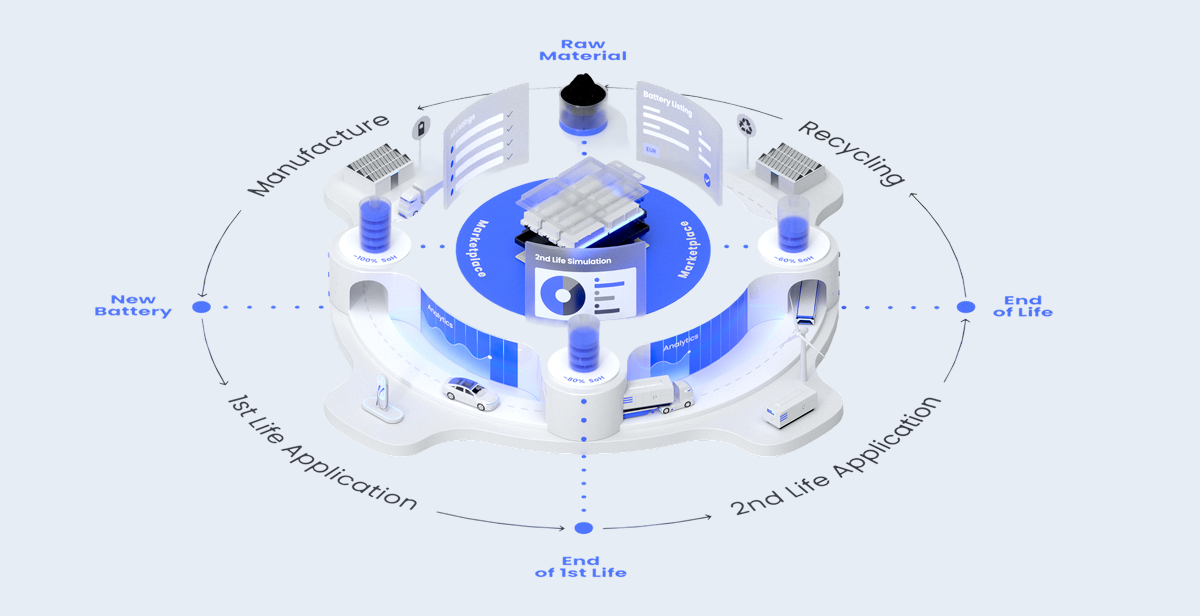
The European Union envisions a circular economy where batteries never become waste—only resources awaiting their next use. This requires:
- Standardized digital battery passport formats enabling cross-border data exchange
- Investment in domestic raw materials processing and refining
- Collaboration between battery recycling, logistics, and manufacturing sectors
- Product designs optimized for disassembly and material recovery
- Based systems that track every physical object from mine to recycling
This transformation affects every stakeholder: from battery manufacturers designing for circularity to municipal services managing fleet transitions to renewable energy providers integrating BESS solutions.
Why Digital Compliance Matters Now
In Europe's fast-moving battery sector, companies that adopt digital compliance early will not just adapt—they will lead.
The convergence of Extended Producer Responsibility, digital twin technology, and carbon footprinting requirements creates a new competitive landscape. Organizations with robust digital infrastructure can respond faster to regulatory changes, demonstrate environmental impact reduction, and capture emerging opportunities in the circular economy.
For fleet managers, logistics companies, and financial investors, knowing the EU Battery Regulation is key. This understanding is required for long-term success in the industry.
Frequently Asked Questions About EU Battery Regulation
Who is considered a "producer" under the EU Batteries Regulation?
A company is considered a producer if it makes batteries in the EU, brings batteries into the EU, or sells batteries in the EU using its own brand name.This includes OEMs, battery manufacturers, importers, and even automotive companies that rebrand batteries. Fleet providers and rental companies using batteries are typically not producers unless they import or brand batteries themselves.
When does the Digital Battery Passport requirement start?
The Digital Battery Passport becomes mandatory in February 2027 for industrial battery systems above 2 kWh, EV batteries, and rechargeable industrial battery packs. Portable batteries are currently exempt, though this may change in future revisions of the EU Battery Regulation.
What data must be included in the Digital Battery Passport?
The Digital Battery Passport must include manufacturing information, carbon footprinting data, recycled content percentages, performance specifications, safety information, and end-of-life handling instructions. Companies can choose to add live data on a battery's health and remaining life. This extra information increases the value of the battery for both second-life companies and insurance providers.
How does Extended Producer Responsibility EPR affect my costs?
Extended Producer Responsibility EPR requires producers to pay fees to Producer Responsibility Organizations (PROs) that finance collection and recycling infrastructure. Fees vary by battery type, weight, and recyclability. Companies with better product designs (easier to recycle, higher recycled content) typically pay lower fees. The long term trend favors sustainable designs.
Can I use third-party services for Digital Battery Passport compliance?
Yes. Many producer responsibility organizations, technology providers, and battery logistics companies offer Digital Battery Passport hosting and management services. This is often more cost-effective than building proprietary digital infrastructure, especially for smaller battery manufacturers or OEMs with limited IT resources.
What happens if I don't comply with the EU Batteries Regulation?
Non-compliance can result in significant penalties including fines, product recalls, and market access restrictions. In some member states, non-compliant batteries cannot legally be sold. For automotive companies, maritime operators, or railway providers, this could halt entire product lines. Financials and insurance companies may also refuse to support non-compliant operations.
The Cost of Inaction
Delaying digital transformation carries real risks:
Market Access: By February 2027, non-compliant batteries cannot enter EU markets. OEMs, battery manufacturers, and importers without Digital Battery Passport capabilities will be shut out.
Competitive Disadvantage: Early movers are already building relationships with producer responsibility organizations, securing access to recycled raw materials, and developing 2nd life business models. Late adopters will find the best opportunities taken.
Higher Costs: Last-minute compliance efforts cost significantly more than phased implementation. Digital infrastructure built under time pressure is often less effective and more expensive to maintain.
Reputational Risk: Companies seen as lagging on sustainability face pressure from financials, customers, and regulators. Insurance companies may charge premium rates for perceived compliance risk.
Lost Revenue: The circular economy creates new ways to make money, like selling live data services, using second-life markets, and optimizing recycling. Only companies using digital technology can fully capture this new revenue.
Download the Full White Paper
Inside the full white paper, you'll discover:
- Detailed compliance roadmaps for Extended Producer Responsibility EPR
- Technical specifications for Digital Battery Passport implementation
- Case studies from automotive, maritime, railway, and energy industry leaders
- Real time data strategies for BESS & renewables and data centers
- Financial models for 2nd life companies and battery recycling operations
- Raw materials security strategies for the European Union
- Digital transformation frameworks for OEMs, PROs, and battery manufacturers
Don't let the February 2027 deadline catch you unprepared. The EU Battery Regulation represents the most significant shift in battery industry governance in decades. Companies that embrace digital compliance, invest in digital infrastructure, and commit to the circular economy will thrive. Those that delay will struggle.
The countdown has begun. The question is no longer whether to act, but how quickly you can move.