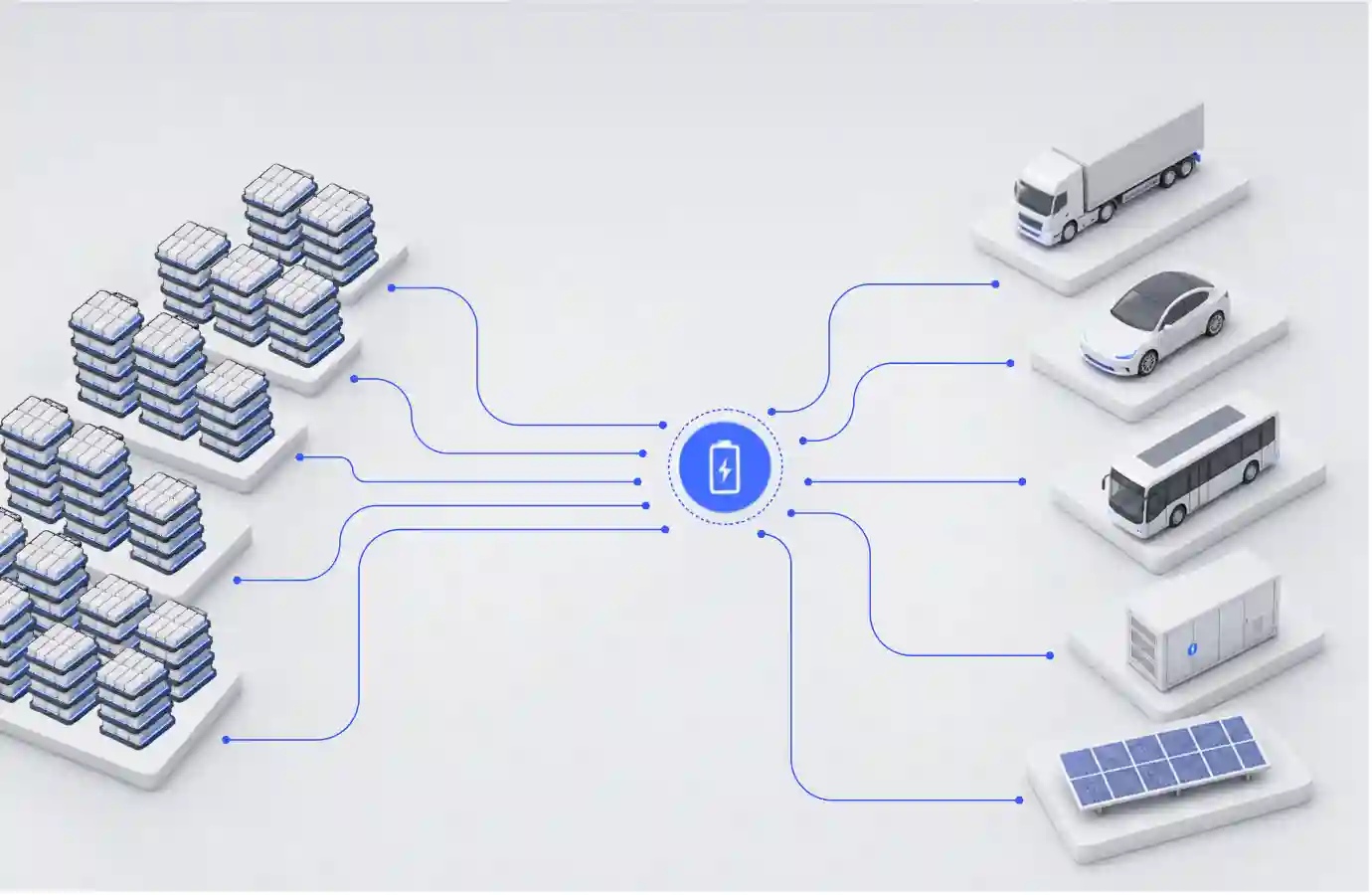
Most coverage of the EU Battery Passport focuses on electric vehicles. The headlines are about automotive OEMs, gigafactories, and the scramble for raw materials. But the regulation reaches much further than cars.
The LMT Battery Challenge: High Volume, Low Visibility
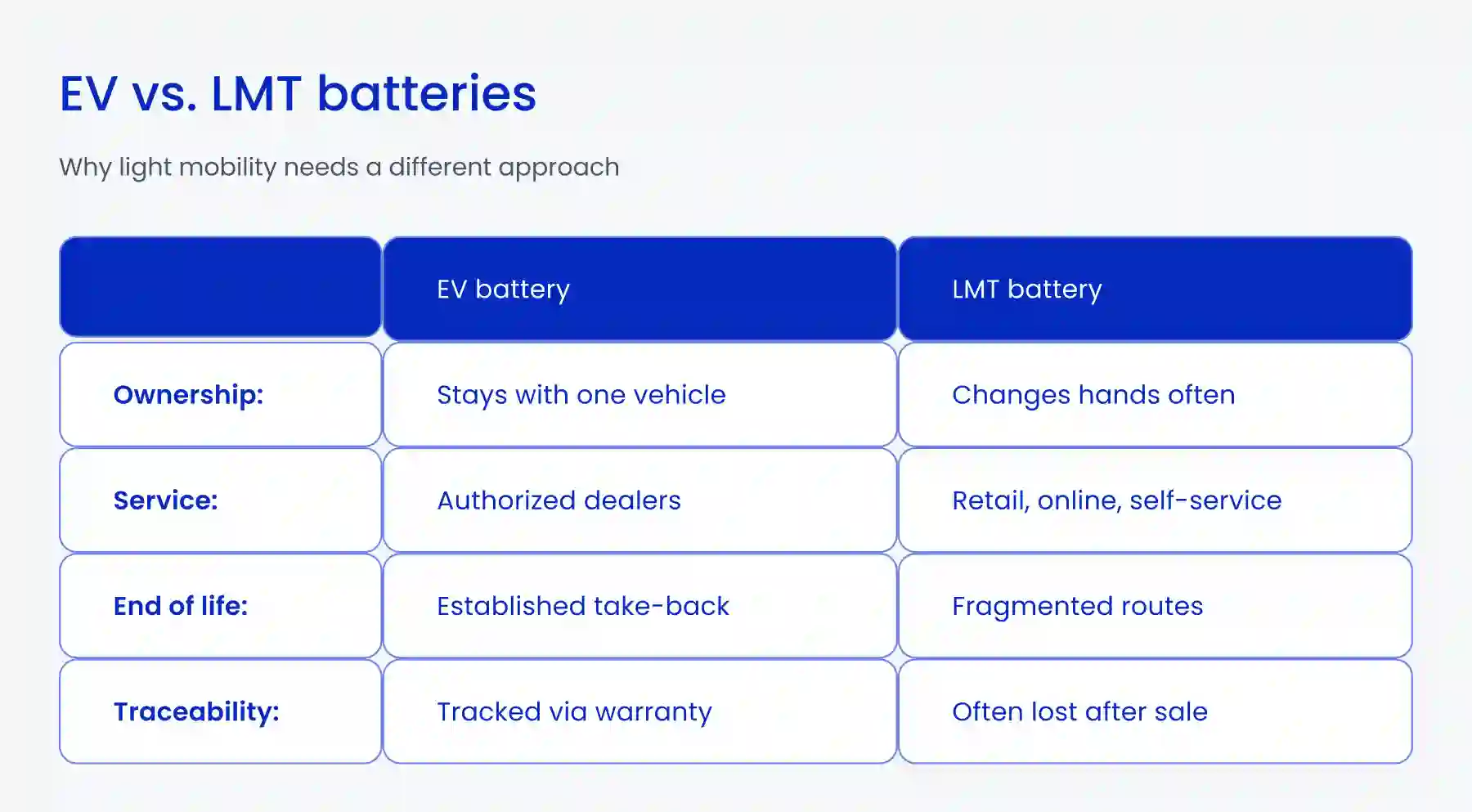
An EV battery usually stays with the vehicle. Authorized dealers service the battery, warranty systems track it, and take-back programs collect it.
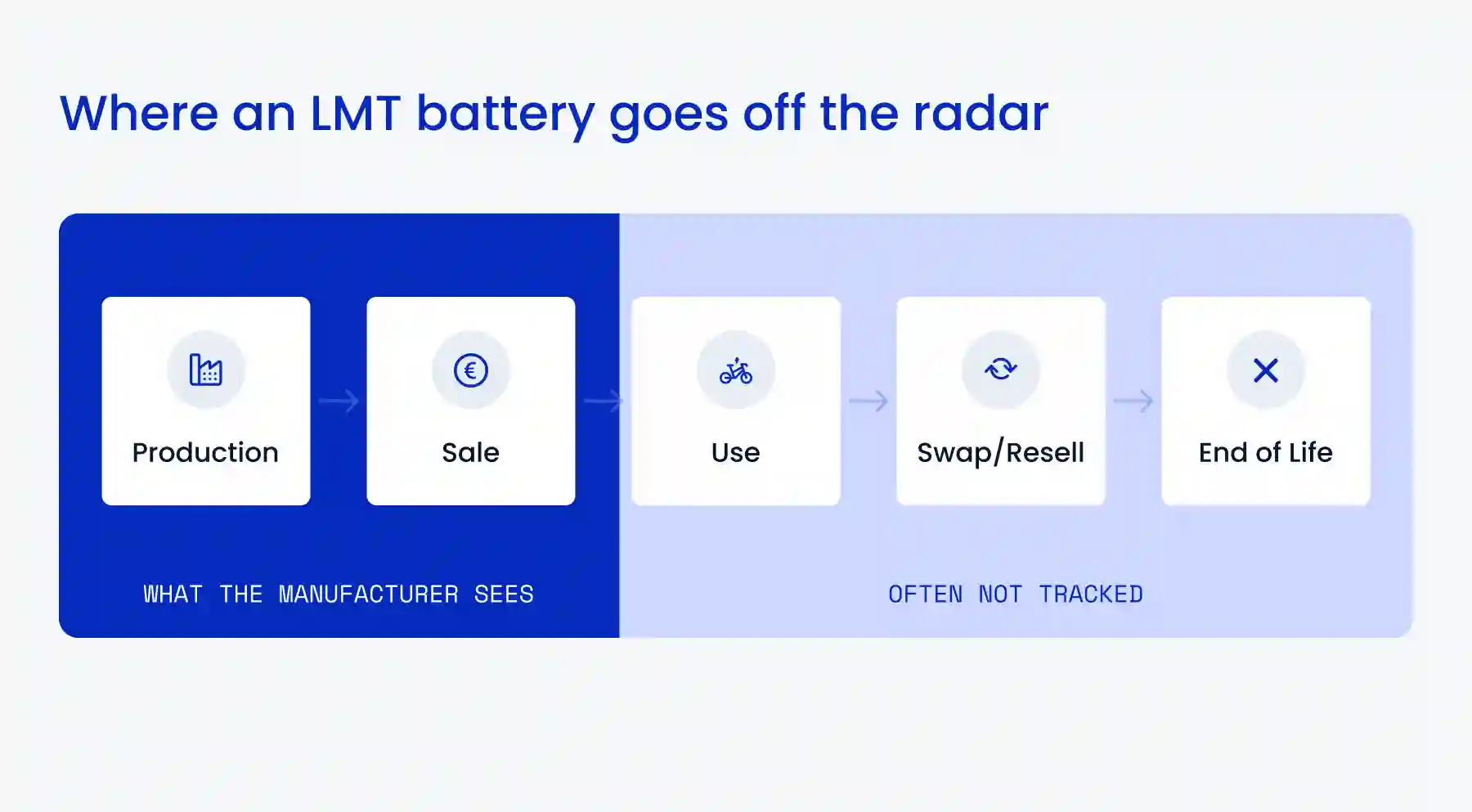
Light mobility transport (LMT) batteries move differently. Retail stores, online marketplaces, and third-party distributors sell these batteries. Ownership changes hands. Users swap and replace batteries themselves.
Fleet operators run thousands of units across a city. Sharing platforms rotate batteries through hundreds of vehicles a month.
This makes battery traceability harder after the point of sale. Many manufacturers have limited visibility once a battery is in the field.
They may not know where it is. They may not know how it is used. They may not know when it might come back. That can make recalls harder, authenticity harder to prove, and end-of-life collection harder to coordinate.
Why Battery Traceability Matters for Light Mobility
A faulty batch can end up spread across many retailers and markets. If a safety issue turns up, there's often no easy way to find the affected units or reach the people who own them. Counterfeit batteries can enter the supply chain with little or no documentation.
Recyclers and refurbishers often get mixed batches with unclear chemistry and little manufacturing data. This makes it harder to judge what is worth reusing.
Companies often lose visibility between production and recycling. The Battery Passport closes this gap.
What the Battery Passport Requires for LMT Batteries
Under Regulation (EU) 2023/1542, LMT batteries are their own category. LMT batteries weigh 25 kg or less and power vehicles like e-bikes and e-scooters. They work with electric motors alone or combined with pedaling (Article 3). That covers e-bikes, e-scooters, electric mopeds, and similar light vehicles.
Battery Passport Compliance Timeline
Starting February 18, 2027, every LMT battery sold in the EU must have a digital battery passport. Users can access it by scanning a QR code on the battery (Article 77). The passport is a machine-readable record covering battery identity, technical characteristics, sustainability and compliance data, and end-of-life information.
Three groups can access different data: the public, government authorities, and professionals who repair or recycle batteries.
Important to note: not all LMT battery requirements start at the same time. The passport launches February 2027. The EU is still deciding what information to require.
Other deadlines come later. Carbon footprint reporting begins August 2028, and recycled content requirements follow a different timeline. Use February 2027 as your anchor date. Regulators are still finalizing some details.
The passport follows each battery through its entire life. Anyone can access the data without needing special software or permission from the manufacturer.
The catch: many manufacturers will need to change how they handle data. Companies store battery data in different systems that don't always talk to each other. After shipping, companies rarely update battery data.
Setting up a unique battery identifier and a shared data structure can take time. Building that foundation is the hard part. It can also be where the value is.
Why Traceability Matters for LMT Batteries
1. Battery Safety and Recall Management
LMT battery fires are a recurring problem. Incidents in apartments, bike storage rooms, and charging areas have drawn regulatory attention and insurance claims. Low-quality batteries, poor charging, or hidden damage cause most incidents.
The Battery Passport makes battery recalls more precise. If a defect shows up, manufacturers can trace the affected units by production batch, chemistry variant, or supplier component.
Fleet operators can check their inventory against it. Retailers can find stock still on the shelf. A user can scan the QR code and see whether their battery is on the list.
Without traceability, recalls stay broad and blunt. Warnings go out, most people ignore them, and faulty batteries stay in use.
2. Counterfeit Battery Detection and Quality Assurance
Battery fires linked to e-bikes and e-scooters have drawn growing attention. In the UK, these fires jumped from 2 incidents in 2017 to 211 in 2024. Batteries were the main cause (source: OPSS).
Similar concerns have prompted regulatory and insurer attention across Europe. Many incidents are linked to low-quality batteries, poor charging, or damage that went unnoticed.
The passport gives buyers something to check against. Anyone can scan the QR code to check if the battery is authentic and see if it matches its specs. A counterfeit battery can't reproduce a valid passport tied to a real production record.
That matters for warranty claims, insurance, and liability. If a battery causes damage, the passport shows a clear chain of custody.
3. Enabling the Second-Life Battery Market
LMT batteries are often replaced before they're worn out. At 70% capacity, batteries still power backup systems or delivery bikes, just not daily commuter rides.
The passport makes that judgment possible. It carries the performance history, cycle count, and state-of-health data a buyer needs to assess remaining capacity.
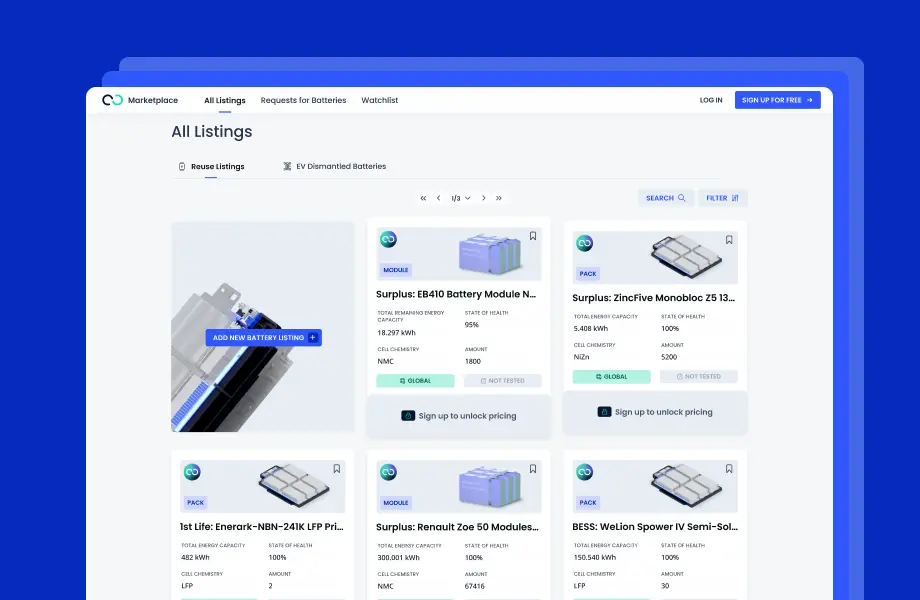
A marketplace makes this easier. Sellers can prove battery quality, and buyers know exactly what they're purchasing. Operators can trade and reuse viable batteries instead of scrapping them early. Battery recycling then handles what's genuinely at the end of the line.
Without that data, second-life trading stalls. Buyers don't trust quality, sellers can't prove value, and operators discard useful batteries too soon.
What This Means for Your Team
If you make, distribute, or manage LMT batteries, the passport changes how you work day to day:
- Product teams: Battery design has to account for data capture. Unique identifiers need to go in during production. Battery Management System (BMS) systems must log data in passport format. Include all required information in your documentation from the beginning
- Supply chain and compliance: Collect supplier data, create the passport during production, and update it throughout the battery's lifecycle. This requires connecting your ERP, PLM, and quality systems with supplier data
- Fleet operators and sharing platforms: You'll track individual batteries, not just counts. When you swap batteries, the passport follows. When performance drops, you update the passport. When retired, the passport directs it to proper recycling
- Recyclers and refurbishers: The passport becomes your intake sheet. It tells you the chemistry, the hazardous content, the likely material composition, and how to take the battery apart. That cuts sorting time, improves safety, and lifts recovery rates
The passport isn't a fixed label. It's a live battery record that changes with the battery. Keeping it current is the real work
How to Prepare for Battery Passport Compliance
- Run a pilot batch: Don't wait for 2027. Pick one product line, create passport records for a small run, and test the workflow. You'll quickly see where data is missing, where systems don't connect, and where manual steps slow you down.
- Settle your identifier approach: Choose a durable, scannable identifier (QR code, data matrix, or RFID) and use it consistently. The code should be scannable without opening the battery and linked to a record you can update.
- Map your data sources: Find where passport data lives today: production records, supplier declarations, BMS logs, compliance files. Then build the connections to pull it into one place.
- Bring your suppliers in early: Cell suppliers, BMS providers, and material vendors will all need to send passport-ready data. Start those conversations now and agree on formats, update frequency, and who's responsible for what.
- Plan for updates after the sale: The passport should reflect real use, not just factory specs. Decide how your system captures state-of-health data (via BMS, service events, or diagnostics) and how it writes it back.
- Line up your end-of-life and trading partners: Work with recyclers, refurbishers, and marketplaces so they can actually use the passport data. Test the handoff and check that what you're providing is useful on their side.
TL;DR: Key Takeaways
The EU Battery Passport regulation applies to light mobility transport (LMT) batteries: e-bikes, e-scooters, and electric mopeds. Starting February 18, 2027. Every LMT battery needs a digital passport accessible via QR code, containing battery identity, technical specs, sustainability data, and end-of-life information.
It helps improve safety, prevent fake batteries, create reuse markets, and meet EU regulations.
Start preparing now. Run pilot tests, create unique battery identifiers, and link your supply chain data systems.
Light mobility transport (LMT) batteries power e-bikes, e-scooters, electric mopeds, and cargo bikes. They fall under the same transparency rules. And they live in a very different world than an EV pack. They're smaller, cheaper, and spread across far more owners.
Product quality can vary between brands and sources. Battery safety has drawn growing attention from regulators and the press. And end-of-life routes are often less structured than for EV batteries, which can make collection and proper handling harder to ensure.
The Battery Passport helps manufacturers track batteries after sale, reduce safety risks, and keep batteries circulating with clear histories.
Looking Ahead: Transparency as a Working Advantage
The Battery Passport can look like an added compliance cost, especially for businesses working on tight margins.
But the market is starting to expect this level of battery transparency anyway. Fleet operators want to know which batteries hold up. Insurers want proof of compliance and safety.
Retailers want to separate legitimate products from counterfeits. Buyers of used batteries want data they can rely on before they trade.
Manufacturers who build passport-ready systems early will be in a better position. They can back quality with data, support warranty claims, and take part in the growing trade in second-life batteries. When customers, regulators, and partners ask for transparency, they'll already have it.
The market is substantial. E-bikes are the best-selling electric vehicles in Europe, with millions sold each year. Sales have stabilized post-pandemic (source: CONEBI).
Shared fleets continue to operate at scale, and cargo bikes are taking on more urban delivery work. The batteries behind all of this need to be safe, traceable, and worth keeping in circulation.
The passport is the record that makes that possible. For LMT battery manufacturers, it's worth treating as a head start rather than a hurdle.
That's what we build at Circunomics. Our Battery Passport tracks each battery from materials and carbon to performance and recycling.
It meets EU requirements and connects the battery ecosystem. Your data stays accessible to all key players. The same information powers our marketplace, helping you assess battery value and find buyers.
Explore how the Battery Passport works!
Frequently Asked Questions (FAQ)
What is an LMT battery?
LMT (Light Mobility Transport) batteries weigh 25 kg or less and power e-bikes, e-scooters, mopeds, and cargo bikes. They work with electric motors alone or combined with pedaling.
When does the Battery Passport become mandatory for LMT batteries?
The EU Battery Passport becomes mandatory for LMT batteries from February 18, 2027. All LMT batteries sold in the EU after this date need a digital passport with a QR code.
What information does the Battery Passport contain?
The Battery Passport includes unique IDs, technical specs, performance data, carbon footprint, compliance documents, usage history, and recycling information. User type (public, authorities, or stakeholders) determines access to different data sets.
How does the Battery Passport help prevent counterfeit batteries?
The Battery Passport creates a verifiable digital record tied to each battery's production. Retailers, fleet operators, and repair shops can scan the QR code to confirm authenticity and review compliance documents. Counterfeit batteries cannot reproduce a valid passport linked to legitimate production records.
What is a second-life battery and how does the passport enable this market?
Second-life batteries can't handle their original job anymore but still work well for lighter, less demanding applications. The passport shows performance history, cycle count, and battery health. Buyers can assess value and trust batteries with 60-80% capacity still remaining.
Who is responsible for creating and maintaining the Battery Passport?
Battery manufacturers or EU sellers are responsible for creating the initial Battery Passport. Fleet operators, service providers, and recyclers update the passport as batteries age.
How can manufacturers prepare for Battery Passport compliance?
Manufacturers should:
- Run pilot programs with small production batches
- Set up unique battery IDs (QR codes or RFID)
- Connect production and supply chain data systems
- Engage suppliers early on data formats
- Plan post-sale updates through BMS
- Partner with recyclers and refurbishers
Does the Battery Passport apply only to new batteries?
The regulation applies to batteries placed on the EU market from February 18, 2027 onward. Existing batteries don't need passports, but manufacturers can adopt them early to get ahead of competitors.
How does the Battery Passport improve battery safety?
The Battery Passport enables precise recall management by allowing manufacturers to trace affected units by production batch, chemistry, or component supplier. Users can scan the QR code to check if their battery is subject to a recall. It also provides clear chain of custody documentation for warranty claims, insurance, and liability purposes.
What is the difference between the Battery Passport and a battery label?
Unlike a static label, the Battery Passport is a live digital record that updates throughout the battery's lifecycle. You scan a QR code to access it. Anyone can read and share it without special software. It holds more data than physical labels.