Andreas Hager has joined Circunomics as Chief Revenue Officer, leading Sales, Business Development, and Sales Operations. He spent years in global sales before moving into commercial vehicle electrification, where he scaled teams and businesses in a market that had to grow up fast.
We sat down with him to talk about why batteries are becoming a trading business, where deals actually break, and what has to change for the market to scale.
Q: You've spent years in sales and commercial vehicle electrification. Why batteries, and why Circunomics?
Because I've watched this exact pattern before. In commercial vehicle electrification, we spent years proving the technology worked. Buses, trucks, retrofits. At some point the technical question was settled, and the real question became commercial: can you actually sell it, deliver it, and scale it? That's a total different story.
Batteries are at similar turning point now. Engineering and technology is largely there. Second-life works. Storage works. What's still immature is the commercial layer, how you buy and sell these assets at volume, with confidence, without every deal turning into a three-month science project. Circunomics is building exactly that layer, and that's what pulled me in. I don't want to sell a promise. The market is ready. And I want help to make it work and scale it.
Q: How would you describe where the 2nd life battery market is today?
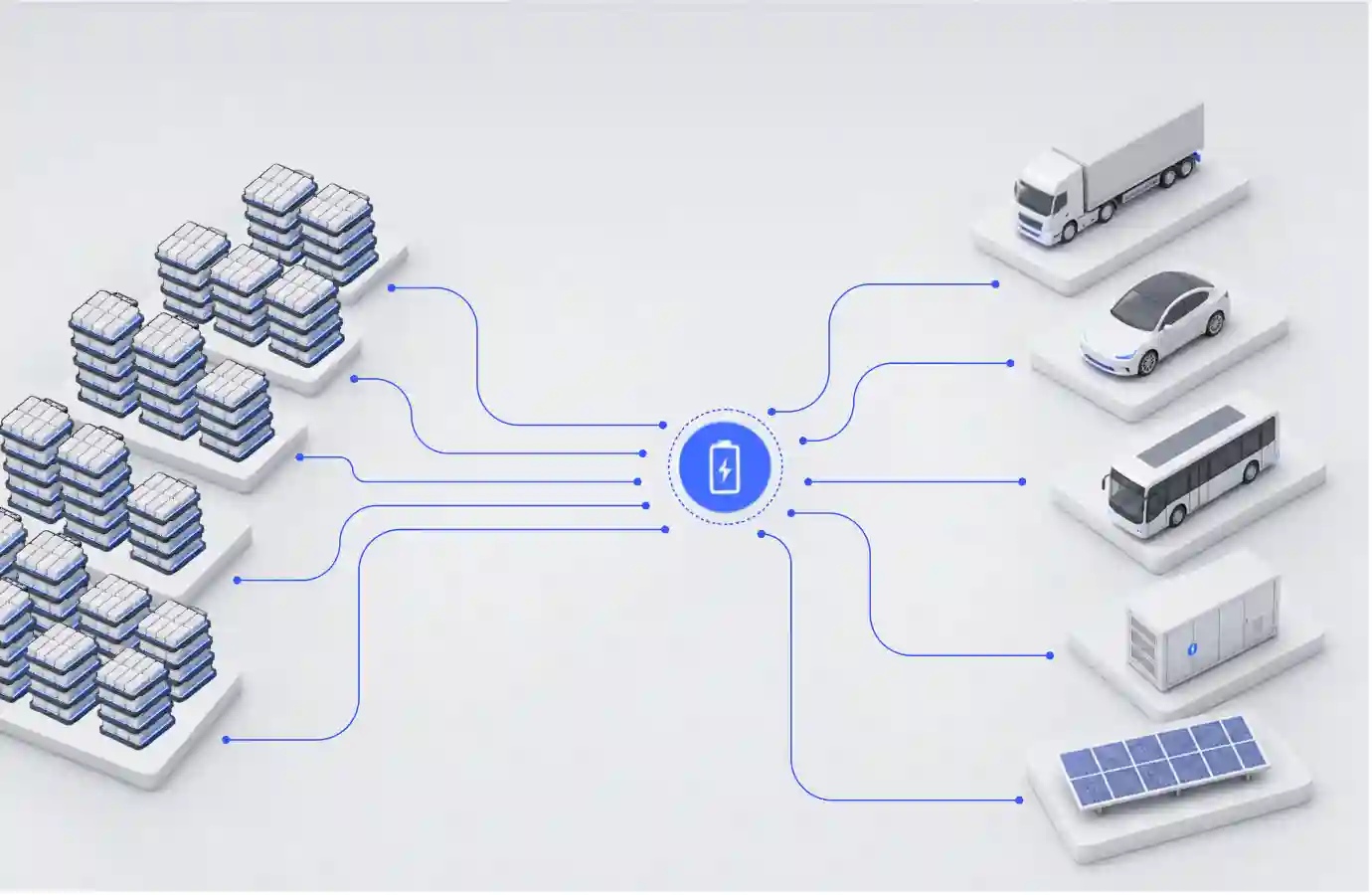
Somewhere between pilot and infrastructure. For years, second-life and battery trading lived in the "interesting project" category. A pilot here, a partnership there. Now the volumes are arriving whether we're ready or not. EV packs from the first big waves are coming off the road. Early stationary storage systems installed a decade ago are hitting end of service. And demand for storage keeps climbing, because the grid needs it.
So, you have real supply and real demand showing up at the same time. That should mean a busy market. But a lot of that potential is stuck, because the mechanics of trading batteries are still clunky. That gap between "the batteries exist" and "the deals close" is the crucial point now.
Q: Where exactly do deals break down?
Almost always at trust and information, not at price.
Picture a buyer, say a BESS developer, who needs a few megawatt hours of second-life capacity. They find a lot. The first questions are obvious: what's the state of health, what chemistry, what's the history? A battery that no longer meets the specifications for a car can still be a strong fit for stationary storage. The same pack can be end-of-life for one buyer and a real opportunity for another. It all depends on the use case and the data behind it.
It falls apart when the seller has the batteries but not the documentation. Or the data exists, but it's inconsistent, unverified, or trapped in a spreadsheet nobody trusts. The buyer can't underwrite the risk, so they hesitate, or they discount heavily to protect themselves, and the seller walks away. The battery was fine. The deal died because the right information didn't travel with it.
Q: So, the problem isn't battery quality, it's the data around the battery?
Exactly. A price and a single state-of-health number are not enough to close a serious deal. A professional buyer needs more: how was the battery measured, what's the thermal history, is the lot consistent or is it a mixed bag, and is there a traceable chain of custody? Those things determine whether they can put the asset into their system and trust it.
When that information is missing, people fall back on gut feeling and heavy discounts. When it's present and verified, the conversation changes completely. You go from "I'm not sure if I can trust this" to "I know what I'm buying." That's the difference between a stalled thread and a signed contract.
Q: A lot of companies have batteries sitting around. Why doesn't that surplus just flow to buyers?
Because availability alone closes nothing. I'd say it comes down to three things.
First, reliable data on the batteries, the qualified picture I just described. Second, clear documentation that a buyer's technical and legal teams can actually accept. And third, matching, someone who can connect that specific lot to the buyer who wants it, in the right region, for the right application.
Miss any one of those and the surplus just stays in stock.
Q: Where does the marketplace change that?
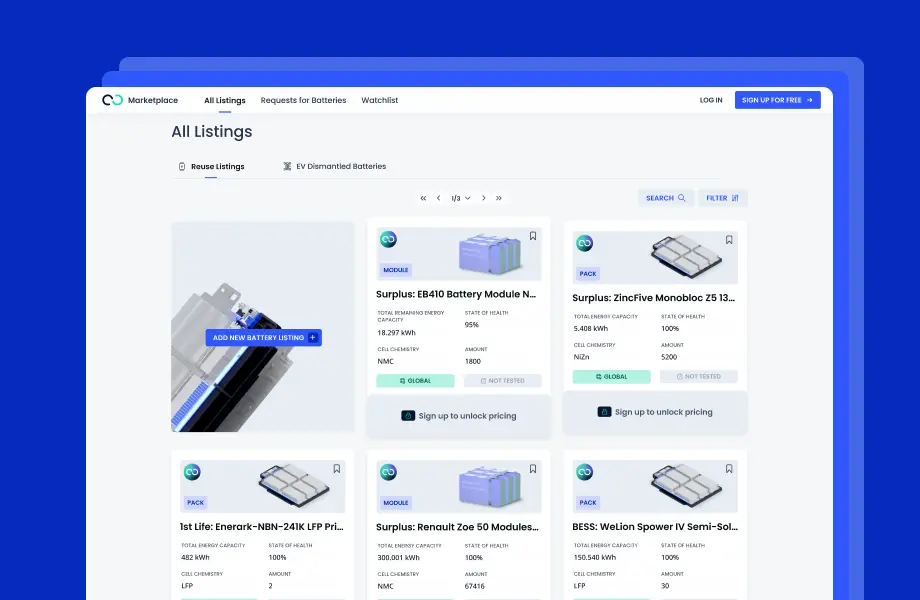
A structured marketplace does something quietly powerful: it puts both sides in front of the same qualified picture of an asset. Same data, same documentation, same standard.
When that happens, you shorten the distance between interest and commitment. The buyer isn't guessing, and the seller isn't defending. Both are looking at the same facts. Decisions get faster and cleaner, and, importantly, they get repeatable. That's the word I keep coming back to. This market can't run on heroic one-off deals forever. It has to become routine, and routine only comes from structure and trust.
Q: BESS is where a lot of the demand is. How does that shape sourcing?
Storage is one of the clearest demand signals we have. As BESS projects scale up, sourcing stops being a spot purchase and becomes a strategic decision. If you're a developer building out capacity, you can't just grab whatever batteries are cheapest this week. You need consistency, availability you can plan around, and quality you can trust across the whole project.
And chemistry matters here. LFP packs, for instance, tend to have strong second-life potential because of their cycle life and thermal stability, even if their raw material value is lower. NMC and NCA carry more metal value but a different profile. A good buyer is thinking about all of this, and a good marketplace helps them source with that nuance built in, rather than treating every battery as an identical commodity.
Q: Regulation is moving too. Where does that fit?
It's a real tailwind. The EU's digital battery passport becomes mandatory in February 2027, and that changes the conversation. Suddenly, traceability and documentation aren't a nice-to-have that a diligent seller might provide. They become the baseline everyone has to meet.
My honest view: the companies treating 2026 as the year to get their data foundation right will be in a very strong position. The passport doesn't sell your batteries for you. But good, structured data absolutely helps you sell them, and the regulation is going to make that data standard. That's a good thing for a functioning market.
Q: What's your actual focus in the first months as CRO?
Three things, and none of them are complicated to say. Build a strong commercial team. Stay genuinely close to our customers, buyers and sellers both, because that's where you learn where the real friction is. And make our own commercial process faster and more reliable, so that from first conversation to closed deal, there's less drag at every step.
I'm here to help this market do the thing it's clearly ready to do.
Q: Last one. What do you want people to associate with Circunomics?
Trust and momentum in our knowledge and technology. I want a buyer or seller to think: if I go there, I'll get a clear picture and I'll actually get a deal done. Not slogans about the circular economy, we can leave the buzzwords out, but a practical, reliable way to buy, sell, and place batteries with confidence. If we get that right, the sustainability story takes care of itself, because the batteries are getting used instead of sitting idle. That's the outcome I care about.
Have battery stock to evaluate, source, or place into a second-life or BESS use case?
👉 Book a short call with Wallentina Carvalho, our Customer Success Manager, to scope your needs and connect you with the right Circunomics expert.